
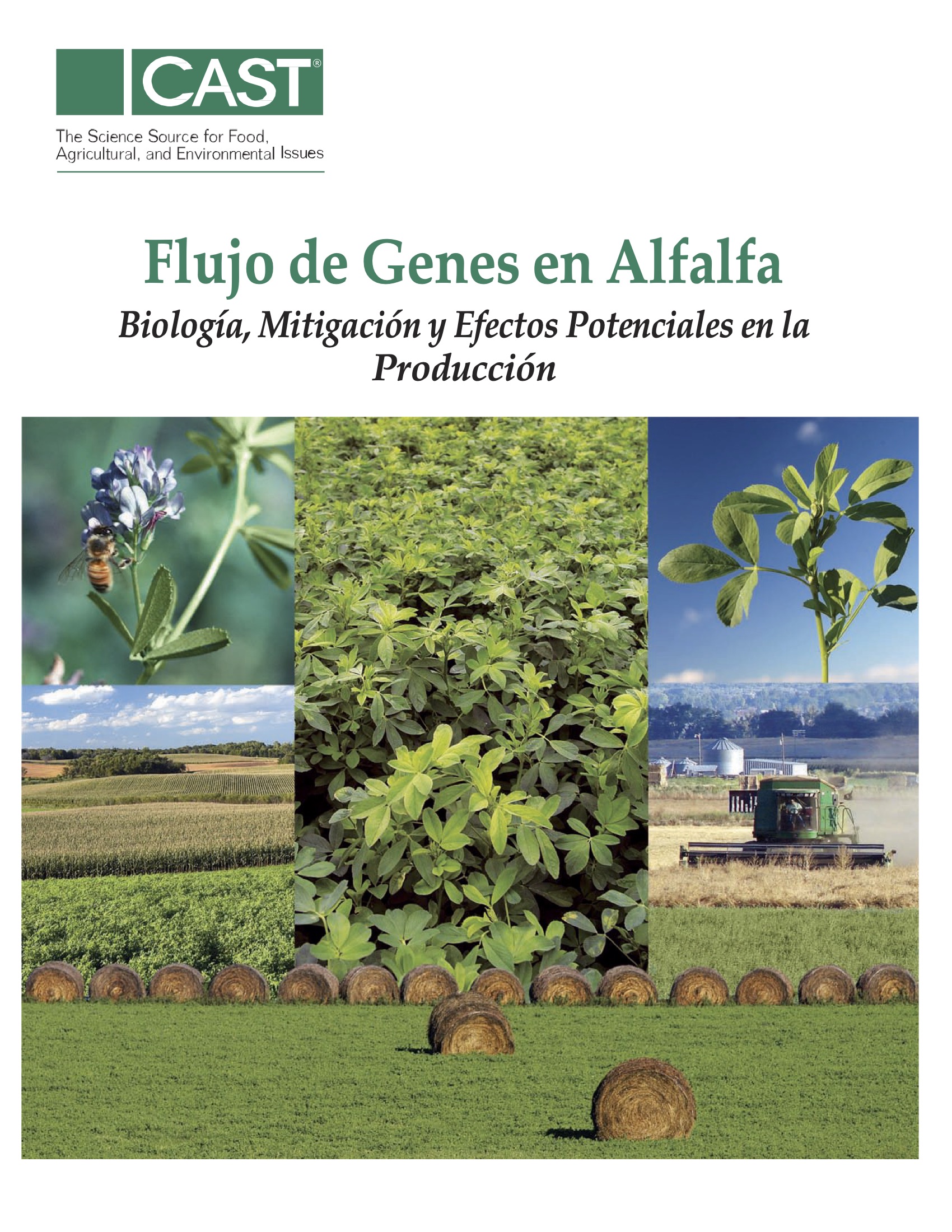
Gene Flow in Alfalfa: Biology, Mitigation, and Potential Impact on Production
DOI:
https://doi.org/10.62300/rnbr0547Keywords:
Gene flow, Alfalfa, Genetic engineering, Coexistence strategies, Adventitious presence, Pollen-mediated transfer, Seed purity, Isolation distances, Pollinators, Best management practicesAbstract
This publication addresses gene flow in alfalfa (Medicago sativa L.) and its implications for coexistence among genetically engineered (GE), conventional, and organic production systems. It explains biological and agronomic factors influencing gene movement via pollen and seed, and outlines mitigation strategies to minimize adventitious presence (AP) of GE traits in sensitive markets. Key findings indicate that gene flow in hay production is extremely low due to frequent harvests before seed set, while seed production poses higher potential risk but can be effectively managed through isolation distances, pollinator control, and best management practices. The report emphasizes science-based coexistence strategies, including certified seed use, crop rotation, and removal of feral plants, to maintain genetic purity and market access.
Downloads
References
Association of Official Seed Certifying Agencies (AOSCA). 2003. Operational Procedures, Crop Standards and Service Programs Publication.
Association of Official Seed Certifying Agencies (AOSCA). 2008.
Bass, L. N., C. R. Gunn, O. B. Hesterman, and E. E. Roos. 1988. Seed physiology, seedling performance, and seed sprouting. In Alfalfa and Alfalfa Improvement. ASA–CSSA–SSSA.
Blackshaw, R. E. and L. M. Rode. 1991. Effect of ensiling and rumen digestion by cattle on weed seed viability. Weed Sci 39:104–108.
Blank, S. C., S. B. Orloff, and D. H. Putnam. 2001. Sequential stochastic production decisions for a perennial crop: The yield/quality tradeoff for alfalfa hay. J Ag Res Econ 26(1):195–211.
Boe, A., L. Xu, P. Johnson, and K. Kephart. 2004. Naturalization of yellow-flowered alfalfa in native rangeland.
Brown, D. E., et al. 1986. Committee Report on Alfalfa Field Isolation.
Canadian Food Inspection Agency (CFIA). 2005. Biology Document Bio2005-02: The Biology of Medicago sativa L.
Cane, J. H. 2004. Pollination Service from Alkali Bees.
Cane, J. H. 2008. A native ground-nesting bee Nomia melanderi sustainably managed to pollinate alfalfa. Apidologie 39:315–323.
Canevari, M., et al. 2000. Overseeding and Companion Cropping in Alfalfa.
CAST. 2007. Implications of Gene Flow in the Scale-up and Commercial Use of Biotechnology-derived Crops.
ESA and EuropaBio. 2007. Adventitious Presence—Bringing Clarity to Confusion.
Falconer, D. S. and T. F. C. MacKay. 1996. Introduction to Quantitative Genetics.
Federal Seed Act. 1998. United States Code.
Fitzpatrick, S., et al. 2003. Pollen-mediated gene flow in alfalfa.
Fitzpatrick, S., et al. 2007a. Alfalfa gene flow research and information applicability to seed production systems.
Fitzpatrick, S., et al. 2007b. Validation of the FGI Best Practices for Roundup Ready Trait Stewardship in Alfalfa Seed Production.
Hammon, B., et al. 2006. Pollen Movement from Alfalfa Seed Production Fields.
ISF. 2008.
James, C. 2005. Global Status of Commercialized Biotech/GM Crops: 2005.
Kendrick, D. L., et al. 2005. Biogeographic survey of feral alfalfa populations in the U.S.
Lacefield, G., et al. 1997. Grazing Alfalfa.
McGregor, S. E. 1976. Insect pollination of cultivated crop plants.
NAFA. 2008. Best Management Practices for Roundup Ready Alfalfa Seed Production.
OECD. 2005. OECD seed schemes 2005: Rules and directions.
Peters, E. J. and D. L. Linscott. 1988. Weeds and weed control.
Putnam, D. H. 2006. Methods to Enable Coexistence of Diverse Production Systems Involving Genetically Engineered Alfalfa.
Remund, K. M., et al. 2001. Statistical considerations in seed purity testing for transgenic traits.
Rincker, C. M., et al. 1988. Seed Production Practices.
St. Amand, P. C., et al. 2000. Risk of alfalfa transgene dissemination and scale-dependent effects.
Strickler, K. and S. Freitas. 1999. Interactions Between Floral Resources and Bees in Commercial Alfalfa Seed Fields.
Sundstrom, F. J., et al. 2003. Identity Preservation of Agricultural Commodities.
Teuber, L. R., et al. 2004. Gene flow in alfalfa under honeybee pollination.
Teuber, L., et al. 2007. Seed-to-Seed and Hay-to-Seed Pollen Mediated Gene Flow in Alfalfa.
Undersander, D., et al. 1993. Hard Seed in Alfalfa.
University of California. 2005. Alfalfa Seed quality Stewardship.
USDA. 2005. National Organic Program.
USDA–FAS. 2007.
USDA–NASS. 2007a–d.
Van Deynze, A. E., et al. 2004. Roundup Ready Alfalfa—An Emerging Technology.
Viands, D. R., et al. 1988. Pollination control: Mechanical and sterility.
Will, H. and O. Tackenberg. 2008. A mechanistic simulation model of seed dispersal by animals.
Woodward, W. T. W. 2006. Roundup Ready alfalfa test kits and influence on the marketplace.
Woodward, W. T. W., et al. 2006. A solution for Roundup Ready Alfalfa in sensitive export markets.
Downloads
Published
Issue
Section
License
Copyright (c) 2019 Council for Agricultural Science and Technology (CAST)

This work is licensed under a Creative Commons Attribution-NonCommercial 4.0 International License.
License Terms for CC Attribution-NonCommercial 4.0:
License URL: https://creativecommons.org/licenses/by-nc/4.0/
License Terms Statement:
You are free to:
- Share — copy and redistribute the material in any medium or format
- Adapt — remix, transform, and build upon the material
Under the following conditions:
- Attribution — you must give appropriate credit, provide a link to the license, and indicate if changes were made
- NonCommercial — you may not use the material for commercial purposes
No additional restrictions — you may not apply legal terms or technological measures that legally restrict others from doing anything the license permits.