
Agriculture and the Microbiome
DOI:
https://doi.org/10.62300/22gx3n60Keywords:
Phytobiome, Plant-soil microbiome, Biological control, Metagenomics, Microbial biostimulantsAbstract
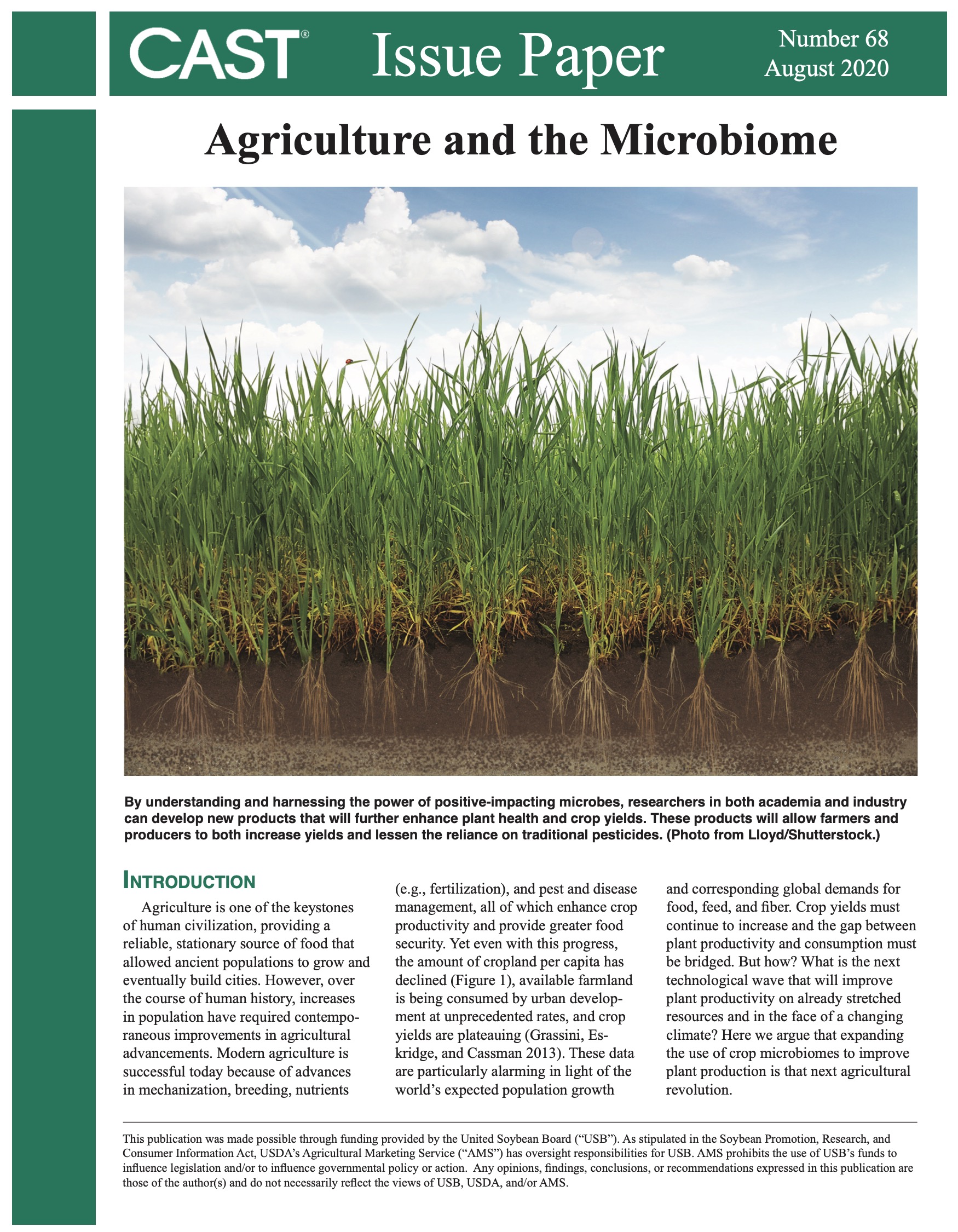
Global agricultural systems face intensifying pressure from population growth, declining cropland per capita, and plateauing crop yields. This issue paper argues that crop microbiomes represent the next major frontier for improving agricultural productivity. The "phytobiome" — the integrated system of plants, associated microorganisms, and their geophysical environment — profoundly influences plant health, nutrient cycling, pathogen resistance, and stress tolerance. Advances in high-throughput DNA sequencing, metagenomics, metatranscriptomics, metabolomics, and machine learning now allow researchers to characterize microbial communities at a scale and resolution previously unattainable, moving beyond single-organism studies toward a systems-level understanding of plant-soil microbiome dynamics. Biological products derived from microbes — including biopesticides and biostimulants — are already commercially available and growing in market value, yet significant gaps remain in translating laboratory results into consistent, field-ready products. Key challenges include improving product efficacy across diverse geographies and environments, navigating the regulatory landscape overseen by the EPA, USDA-APHIS, and FDA, and effectively communicating the science to growers, policymakers, and the public. The paper further argues that progress in this field requires new models of interdisciplinary graduate training, stronger academic-industry partnerships, and coordinated funding strategies. A case study on biological control of aflatoxin-producing Aspergillus flavus illustrates how fundamental research in fungal biology can directly inform applied biocontrol strategies. The task force concludes with specific recommendations for investment in phytobiome infrastructure, cutting-edge analytical technologies, science communication, and interdisciplinary education to unlock the full potential of microbiome-based solutions for global food security.
Downloads
References
Agler, M. T., J. Ruhe, S. Kroll, C. Morhenn, S.-T. Kim, D. Weigel, and E. M. Kemen. 2016. Microbial hub taxa link host and abiotic factors to plant microbiome variation. PLoS Biol 14, e1002352.
Aksoy, E., G. Louwagie, C. Gardi, M. Gregor, C. Schröder, and M. Löhnertz. 2017. Assessing soil biodiversity potentials in Europe. Sci Total Environ 589:236–249.
Alaniz Zanon, A., M. S., G. G. Barros, and S. N. Chulze. 2016. Non-aflatoxigenic Aspergillus flavus as potential biocontrol agents to reduce aflatoxin contamination in peanuts harvested in Northern Argentina. Int J Food Microbiol 231:63–68.
Alberts, B., A. Johnson, J. Lewis, M. Raff, K. Roberts, and P. Walter. 2008. Molecular Biology of the Cell, 5th Edition. p. 551. Garland Science, New York, New York.
Allum, N., P. Sturgis, D. Tabourazi, and I. Brunton-Smith. 2008. Science knowledge and attitudes across cultures: A meta-analysis. Public Understanding of Science 17(1):35–54.
Amaral-Zettler, L. A., E. A. McCliment, H. W. Ducklow, and S. M. Huse. 2009. A method for studying protistan diversity using massively parallel sequencing of V9 hypervariable regions of small-subunit ribosomal RNA genes. PLoS One 4:1–9.
Atehnkeng, J., M. Donner, P. S. Ojiambo, B. Ikotun, J. Augusto, P. J. Cotty, and R. Bandyopadhyay. 2016. Environmental distribution and genetic diversity of vegetative compatibility groups determine biocontrol strategies to mitigate aflatoxin contamination of maize by Aspergillus flavus. Microb Biotechnol 9:75–88.
Awaisheh, S. S., R. J. Rahahleh, R. M. Algroom, A. A. Al-Bakeheit, J. N. Al-Khazaleh, and B. A. Al-Dababseh. 2019. Contamination level and exposure assessment to Aflatoxin M1 in Jordanian infant milk formulas. Ital J Food Saf 8:8263.
Bai, Y., D. B. Müller, G. Srinivas, R. Garrido-Oter, E. Potthoff, M. Rott, N. Dombrowski, P. C. Münch, S. Spaepen, M. Remus-Emsermann, B. Hüttel, A. C. McHardy, J. A. Vorholt, and P. Schulze-Lefert. 2015. Functional overlap of the Arabidopsis leaf and root microbiota. Nature 528:364–369.
Bakker, Peter, Berendsen Roeland, Doornbos Rogier, Wintermans Paul, Pieterse Corné. 2013. The rhizosphere revisited: Root microbiomics. Front Plant Sci 4:165.
Bale, J. S., J. C. van Lenteren, and F. Bigler. 2008. Biological control and sustainable food production. Philos Trans R Soc L B Biol Sci 363:761–776.
Baltrus, D. A. 2017. Adaptation, specialization, and coevolution within phytobiomes. Curr Opin Plant Biol 38:109–116.
Bandyopadhyay, R., A. Ortega-Beltran, A. Akande, C. Mutegi, J. Atehnkeng, L. Kaptoge, A. L. Senghor, B. N. Adhikari, and P. J. Cotty. 2016. Biological control of aflatoxins in Africa: current status and potential challenges in the face of climate change. World Mycotoxin J 9:771–789.
Bayman, P., J. L. Baker, and N. E. Mahoney. 2002. Aspergillus on tree nuts: Incidence and associations. Mycopathologia 155:161–169.
Bennett, J. W. and M. Klich. 2003. Mycotoxins. Clin Microbiol Rev 16:497–516.
Berg, G. 2009. Plant–microbe interactions promoting plant growth and health: Perspectives for controlled use of microorganisms in agriculture. Appl Microbiol Biot 84:11–18.
Binder, A. R., D. A. Scheufele, D. Brossard, and A. C. Gunther. 2011. Interpersonal amplification of risk? Citizen discussions and their impact on perceptions of risks and benefits of a biological research facility. Risk Analysis 31(2):324–334.
Boardman, C., D. Gray, and D. Rivers. 2013. Cooperative Research Centers and Technical Innovation: Government Policies, Industry Strategies, and Organizational Dynamics. Springer Press, New York.
Bomgardner, M. M. 2018. How new beneficial microbes are performing on the farm. Chem Eng News 96(37).
Bulgarelli, D., K. Schlaeppi, S. Spaepen, E. V. L. van Themaat, and P. Schulze-Lefert. 2013. Structure and functions of the bacterial microbiota of plants. Annu Rev Plant Biol 64:807–838.
Bulgarelli, D., M. Rott, K. Schlaeppi, E. Ver Loren van Themaat, N. Ahmadinejad, F. Assenza, P. Rauf, B. Huettel, R. Reinhardt, E. Schmelzer, J. Peplies, F. O. Gloeckner, R. Amann, T. Eickhorst, and P. Schulze-Lefert. 2012. Revealing structure and assembly cues for Arabidopsis root-inhabiting bacterial microbiota. Nature 488:91–95.
Busby, P. E., C. Soman, M. R. Wagner, M. L. Friesen, J. Kremer, A. Bennett, M. Morsy, J. A. Eisen, J. E. Leach, and J. L. Dangl. 2017. Research priorities for harnessing plant microbiomes in sustainable agriculture. PLoS Biol 15(3):e2001793.
Callahan, B. J., P. J. McMurdie, and S. P. Holmes. 2017. Exact sequence variants should replace operational taxonomic units in marker-gene data analysis. The ISME Journal 11:2639–2643.
Camiletti, B. X., J. Moral, C. M. Asensio, A. K. Torrico, E. I. Lucini, M. de la P. Giménez-Pecci, and T. J. Michailides. 2018. Characterization of Argentinian Endemic Aspergillus flavus Isolates and Their Potential Use as Biocontrol Agents for Mycotoxins in Maize. Phytopathology 108:818–828.
Carbone, I., J. L. Jakobek, J. H. Ramirez-Prado, and B. W. Horn. 2007a. Recombination, balancing selection and adaptive evolution in the aflatoxin gene cluster of Aspergillus parasiticus. Mol Ecol 16:4401–4417.
Carbone, I., Ramirez-Prado J. H., Jakobek J. L., and Horn B. W. 2007b. Gene duplication, modularity and adaptation in the evolution of the aflatoxin gene cluster. BMC Evol Biol 7:111.
Carbone, I., J. B. White, J. Miadlikowska, A. E. Arnold, M. A. Miller, F. Kauff, J. M. U'Ren, G. May, and F. Lutzoni. 2017. T-BAS: Tree-Based Alignment Selector toolkit for phylogenetic-based placement, alignment downloads, and metadata visualization; an example with the Pezizomycotina tree of life. Bioinformatics 33:1160–1168.
Carbone, I., J. B. White, J. Miadlikowska, A. E. Arnold, M. A. Miller, N. Magain, J. M. U'Ren, and F. Lutzoni. 2019. T-BAS version 2.1: Tree-Based Alignment Selector toolkit for evolutionary placement of DNA sequences and viewing alignments and specimen metadata on curated and custom trees. Microbiology Resource Announcements 8:e00328-19.
Case, R. J., Y. Boucher, I. Dahllöf, C. Holmström, W. F. Doolittle, and S. Kjelleberg. 2007. Use of 16S rRNA and rpoB genes as molecular markers for microbial ecology studies. Appl Environ Microb 73(1):278–288.
Castillo, J. D., J. M. Vivanco, and D. K. Manter. 2017. Bacterial microbiome and nematode occurrence in different potato agricultural soils. Microbial Ecol 74:888–900.
Chapelle, E., R. Mendes, P. A. H. Bakker, and J. M. Raaijmakers. 2016. Fungal invasion of the rhizosphere microbiome. ISME J 10:265–268.
Chen, T. and C. Guestrin. 2016. XGBoost: A scalable tree boosting system. CoRR abs/1603.0.
Chen, Y., F. Yan, Y. Chai, H. Liu, R. Kolter, R. Losick, and J. Guo. 2013. Biocontrol of tomato wilt disease by Bacillus subtilis isolates from natural environments depends on conserved genes mediating biofilm formation. Environ Microbiol 15:848–864.
Cho, H., T. Reimer, and K. McComas (Eds.). 2015. The SAGE Handbook of Risk Communication. Sage, Thousand Oaks, California.
Chong, J. and J. Xia. 2017. Computational approaches for integrative analysis of the metabolome and microbiome. Metabolites 7(4).
Corral-Lugo, A., A. Daddaoua, A. Ortega, M. Espinosa-Urgel, and T. Krell. 2016. Rosmarinic acid is a homoserine lactone mimic produced by plants that activates a bacterial quorum-sensing regulator. Sci Signal 9(409):ra1.
Cotty, P. J. 1990. Effect of atoxigenic strains of Aspergillus flavus on aflatoxin contamination of developing cottonseed. Plant Dis 74:233–235.
Cotty, P. J. 2006. Biocompetitive exclusion of toxigenic fungi. In The Mycotoxin Factbook. Pp. 179–197. D. Barug, D. Bhatnagar, H. P. van Egmond, J. W. van der Kamp, W. A. van Osenbruggen, and A. Visconti (eds). Wageningen Academic Publishers, The Netherlands.
Council for Agricultural Science and Technology (CAST). 2003. Mycotoxins: Risks in Plant, Animal, and Human Systems. Task Force Report 139. CAST, Ames, Iowa.
Debackere, K. and R. Veugelers. 2005. The role of academic technology transfer organizations in improving industry science links. Res Policy 34:321–342.
Denton, M., R. Yates, N. Seymour, and D. Herridge. 2013. Rhizobial Inoculants Fact Sheet. Grains Research and Development Corporation, 1–4.
Dorner, J. W. 2004. Biological Control of Aflatoxin Contamination of Crops. J Toxicol Toxin Rev 23:425–450.
Dorner, J. W. 2005. Biological control of aflatoxin crop contamination. In Aflatoxin and Food Safety. pp. 333–352. H. K. Abbas (ed.) Taylor and Francis, Boca Raton, Florida.
Drott, M. T., B. P. Lazzaro, D. L. Brown, I. Carbone, and M. G. Milgroom. 2017. Balancing selection for aflatoxin in Aspergillus flavus is maintained through interference competition with, and fungivory by insects. Proc R Soc B 284.
Duckworth, O. W., M. Y. Andrews, M. A. Cubeta, A. M. Grunden, and P. S. Ojiambo. 2017. Revisiting graduate student training to address agricultural and environmental societal challenges. Agr Environ Lett 2.
Dundore-Arias, J. P., E. A. Eloe-Fadrosh, L. M. Schriml, G. A. Beattie, F. P. Brennan, P. E. Busby, R. B. Calderon, S. C. Castle, J. B. Emerson, S. E. Everhart, K. Eversole, K. E. Frost, J. R. Herr, A. I. Huerta, A. S. Iyer-Pascuzzi, A. K. Kalil, J. E. Leach, J. Leonard, J. E. Maul, B. Prithiviraj, M. Potrykus, N. R. Redekar, J. A. Rojas, K. A. T. Silverstein, D. J. Tomso, S. G. Tringe, B. A. Vinatzer, and L. L. Kinkel. 2020. Community-Driven Metadata Standards for Agricultural Microbiome Research. Phytobiomes.
Durrant, W. E. and X. Dong. 2004. Systemic acquired resistance. Annu Rev Phytopathol 42:185–209.
Environmental Protection Agency (EPA). 2019. Pesticides; Draft Guidance for Pesticide Registrants on Plant Regulator Label Claims, Including Plant Biostimulants; Notice of Availability. 84 Federal Register 59 (27 March 2019), pp. 11538–11540.
Eren, A. M., Ö. C. Esen, C. Quince, J. H. Vineis, H. G. Morrison, M. L. Sogin, and T. O. Delmont. 2015. Anvi'o: An advanced analysis and visualization platform for 'omics data. PeerJ 3:e1319.
Federal Food, Drug, and Cosmetic Act (FFDCA). 1958. 21st U.S.C. §348.
Federal Insecticide, Fungicide, and Rodenticide Act (FIRFA). 1996. 7 U.S.C. §136 et seq.
Ferguson, B. A., T. A. Dreisbach, C. G. Parks, G. M. Filip, and C. L. Schmitt. 2003. Coarse-scale population structure of pathogenic Armillaria species in a mixed-conifer forest in the Blue Mountains of northeast Oregon. Can J Forest Res 33:612–623.
Fierer, N. 2017. Embracing the unknown: Disentangling the complexities of the soil microbiome. Nat Rev Microbiol 15:579–590.
Finkel, O. M., G. Castrillo, S. Herrera Paredes, I. Salas González, and J. L. Dangl. 2017. Understanding and exploiting plant beneficial microbes. Curr Opin Plant Biol 38:155–163.
FMC Corporation. 2020. FMC Corporation Announces Strong First Quarter and Forecasts Solid Full-Year Revenue Performance Driven by Strong Organic Growth.
Food and Agriculture Organization of the United Nations (FAO). 2019. Land Use, Irrigation and Agricultural Practices: 1961–2017.
Food and Agriculture Organization of the United Nations (FAO). 2020. FAOSTAT.
Food Safety Modernization Act (FSMA). 2011. 21 U.S.C. §2201.
Frewer, L. J., K. Bergmann, M. Brennan, R. Lion, R. Meertens, G. Rowe, M. Siegrist, and C. Vereijken. 2011. Consumer response to novel agri-food technologies: Implications for predicting consumer acceptance of emerging food technologies. Trends in Food Science & Technology 22(8):442–456.
Gilbert, J. A., J. K. Jansson, and R. Knight. 2014. The Earth Microbiome Project: Successes and aspirations. BMC Biol 12:69.
Goswami, S. R., B. R. Maurya, A. N. Dubey, and N. K. Singh. 2019. Role of phosphorus solubilizing microorganisms and dissolution of insoluble phosphorus in soil. Int J Chem Stud 7(3):3905–3913.
Grassini, P., K. M. Eskridge, and K. G. Cassman. 2013. Distinguishing between yield advances and yield plateaus in historical crop production trends. Nat Commun 4:2918.
Guhr, A., W. Borken, M. Spohn, and E. Matzner. 2015. Redistribution of soil water by a saprotrophic fungus enhances carbon mineralization. P Natl Acad Sci 112:14647–14651.
Hacquard, S., S. Spaepen, R. Garrido-Oter, and P. Schulze-Lefert. 2017. Interplay between innate immunity and the plant microbiota. Annu Rev Phytopathol 55:565–589.
Haney, C. H., B. S. Samuel, J. Bush, and F. M. Ausubel. 2015. Associations with rhizosphere bacteria can confer an adaptive advantage to plants. Nat Plants 1:15051.
Harrington, J. M., O. W. Duckworth, and K. Haselwandter. 2015. The fate of siderophores: Antagonistic environmental interactions in exudate-mediated micronutrient uptake. Biometals 28:461.
Harris, M. 2010. Interdisciplinary strategy and collaboration: A case study of American research universities. J Res Admin 41:22–34.
Hartle, J. C., S. Cole, P. Trepman, B. W. Chrisinger, and C. D. Gardner. 2017. Interdisciplinary food-related academic programs: A 2015 snapshot of the United States landscape. J Agr Food Syst Comm Dev 7(4):35–50.
Herrera Paredes, S., T. Gao, T. F. Law, O. M. Finkel, T. Mucyn, P. J. P. L. Teixeira, I. Salas González, M. E. Feltcher, M. J. Powers, E. A. Shank, C. D. Jones, V. Jojic, J. L. Dangl, and G. Castrillo. 2018. Design of synthetic bacterial communities for predictable plant phenotypes. PLoS Biol 16:1–41.
Heyer, R., F. Kohrs, U. Reichl, and D. Benndorf. 2015. Metaproteomics of complex microbial communities in biogas plants. Microb Biotechnol 8:749–763.
Holley, K. A. 2009. Interdisciplinary strategies as transformative change in higher education. Innov High Educ 34(5):331–344.
Horn, B. W., R. M. Gell, R. Singh, R. B. Sorensen, and I. Carbone. 2016. Sexual reproduction in Aspergillus flavus sclerotia: Acquisition of novel alleles from soil populations and uniparental mitochondrial inheritance. PLoS One 11:e0146169.
Horn, B. W. 2007. Biodiversity of Aspergillus section Flavi in the United States: a review. Food Addit Contam 24:1088–1101.
Horn, B. W., G. G. Moore, and I. Carbone. 2009. Sexual reproduction in Aspergillus flavus. Mycologia 101:423–429.
Howard, R. J. and B. Valent. 1996. Breaking and entering: Host penetration by the fungal rice blast pathogen Magnaporthe grisea. Annu Rev Microbiol 50:491–512.
Human Microbiome Project Consortium. 2012. Structure, function and diversity of the healthy human microbiome. Nature 486(7402):207–214.
Jaenicke, R. 2005. Abundance of cellular material and proteins in the atmosphere. Science 308(5718):73.
James, C. 2014. Global Status of Commercialized Biotech/GM Crops: 2014. ISAAA Brief No. 49. The International Service for the Acquisition of Agri-biotech Applications (ISAAA), Ithaca, New York.
Johnson, L. J., A. C. M. de Bonth, L. R. Briggs, J. R. Caradus, S. C. Finch, D. J. Fleetwood, L. R. Fletcher, D. E. Hume, R. D. Johnson, A. J. Popay, B. A. Tapper, W. R. Simpson, C. R. Voisey, and S. D. Card. 2013. The exploitation of epichloae endophytes for agricultural benefit. Fungal Divers 60:171–188.
Joung, Y. S., Z. Ge, and C. R. Buie. 2017. Bioaerosol generation by raindrops on soil. Nat Commun 8:14668.
Joyn Bio. 2020. Engineering microbes for sustainable agriculture.
Kagot, V., S. Okoth, M. De Boevre, and S. De Saeger. 2019. Biocontrol of Aspergillus and Fusarium Mycotoxins in Africa: Benefits and Limitations. Toxins 11(2):109.
Knight, R., A. Vrbanac, B. C. Taylor, A. Aksenov, C. Callewaert, J. Debelius, A. Gonzalez, T. Kosciolek, L.-I. McCall, D. McDonald, A. V. Melnik, J. T. Morton, J. Navas, R. A. Quinn, J. G. Sanders, A. D. Swafford, L. R. Thompson, A. Tripathi, Z. Z. Xu, J. R. Zaneveld, Q. Zhu, J. G. Caporaso, and P. C. Dorrestein. 2018. Best practices for analysing microbiomes. Nat Rev Microbiol 16:410–422.
Kropff, M. J. J., J. Bouma, and J. W. W. Jones. 2001. Systems approaches for the design of sustainable agro-ecosystems. Agr Syst 70:369–393.
Langille, M., J. Zaneveld, J. Caporaso, et al. 2013. Predictive functional profiling of microbial communities using 16S rRNA marker gene sequences. Nat Biotechnol 31:814–821.
Leach, J. E., L. R. Triplett, C. T. Argueso, and P. Trivedi. 2017. Communication in the phytobiome. Cell 169:587–596.
Lebeis, S. L., S. H. Paredes, D. S. Lundberg, N. Breakfield, J. Gehring, M. McDonald, S. Malfatti, T. Glavina del Rio, C. D. Jones, S. G. Tringe, and J. L. Dangl. 2015. Salicylic acid modulates colonization of the root microbiome by specific bacterial taxa. Science 349(6250):860–864.
Lee, E.-H., J.-K. Eo, K.-H. Ka, and A.-H. Eom. 2013. Diversity of arbuscular mycorrhizal fungi and their roles in ecosystems. Mycobiology 41:121–125.
Lehmann, A., W. Zheng, and M. C. Rillig. 2017. Soil biota contributions to soil aggregation. Nat Ecol Evol 1:1828–1835.
Lewis, M. H., I. Carbone, J. M. Luis, G. A. Payne, K. L. Bowen, A. K. Hagan, R. Kemerait, R. Heiniger, and P. S. Ojiambo. 2019. Biocontrol strains differentially shift the genetic structure of indigenous soil populations of Aspergillus flavus. Front Microbiol 10:1738.
Little, A. E. F., C. J. Robinson, S. B. Peterson, K. F. Raffa, and J. Handelsman. 2008. Rules of engagement: Interspecies interactions that regulate microbial communities. Annu Rev Microbiol 62:375–401.
Lundberg, D. S., S. L. Lebeis, S. H. Paredes, S. Yourstone, J. Gehring, S. Malfatti, J. Tremblay, A. Engelbrektson, V. Kunin, T. G. del Rio, R. C. Edgar, T. Eickhorst, R. E. Ley, P. Hugenholtz, S. G. Tringe, and J. L. Dangl. 2012. Defining the core Arabidopsis thaliana root microbiome. Nature 488:86.
Lunde, J. P., M. Baker, F. H. Buewlow, and L. S. Hayes. 1995. Reshaping Curricula: Revitalization Programs at Three Land Grant Universities. Anker Publishing, Boston, Massachusetts.
Luster, J., A. Göttlein, B. Nowack, and G. Sarret. 2009. Sampling, defining, characterising and modelling the rhizosphere—The soil science toolbox. Plant Soil 321(1–2):457–482.
Lutchen, K. R. 2018. Why Companies and Universities Should Forge Long-Term Collaborations. Harv Bus Rev.
Makhlouf, J., A. Carvajal-Campos, A. Querin, S. Tadrist, O. Puel, S. Lorber, I. P. Oswald, M. Hamze, J.-D. Bailly, and S. Bailly. Morphologic, molecular and metabolic characterization of Aspergillus section Flavi in spices marketed in Lebanon. Sci Rep 9:5263.
Marschner, H. 1995. Mineral Nutrition of Higher Plants. 2d ed. Academic Press, London, England.
Masoom, H., D. Courtier-Murias, H. Farooq, R. Soong, B. P. Kelleher, C. Zhang, W. E. Maas, M. Fey, R. Kumar, M. Monette, H. J. Stronks, M. J. Simpson, and A. J. Simpson. 2016. Soil organic matter in its native state: Unravelling the most complex biomaterial on earth. Environ Sci Technol 50:1670–1680.
Mauro, A., E. Garcia-Cela, A. Pietri, P. J. Cotty, and P. Battilani. 2018. Biological Control Products for Aflatoxin Prevention in Italy: Commercial Field Evaluation of Atoxigenic Aspergillus flavus Active Ingredients. Toxins 10:30.
McNally, B. 2018. Biopesticides Program: Looking at Today and Tomorrow. U.S. Environmental Protection Agency.
Miller, J. J. 2016. The role of interdisciplinary scholarship and research to meet the challenges facing agriculture in the 21st century. Ph.D. dissertation, University of Nebraska–Lincoln.
Mitchell, N. J., E. Bowers, C. Hurburgh, and F. Wu. 2016. Potential economic losses to the US corn industry from aflatoxin contamination. Food additives & contaminants. Part A, Chemistry, analysis, control, exposure & risk assessment 33:540–550.
Moissl-Eichinger, C., M. Pausan, J. Taffner, G. Berg, C. Bang, and R. A. Schmitz. 2018. Archaea are interactive components of complex microbiomes. Trends Microbiol 26:70–85.
Molo, M. S., R. W. Heiniger, L. Boerema, and I. Carbone. 2019. Trial Summary on the Comparison of Various Non-Aflatoxigenic Strains of Aspergillus flavus on Mycotoxin Levels and Yield in Maize. Agron J 111:942–946.
Moore, G. G., R. A. Olarte, B. W. Horn, J. L. Elliott, R. Singh, C. J. O'Neal, and I. Carbone. 2017. Global population structure and adaptive evolution of aflatoxin-producing fungi. Ecol Evol 7:9179–9191.
Moore, G. G., J. L. Elliott, R. Singh, B. W. Horn, J. W. Dorner, E. A. Stone, S. N. Chulze, G. G. Barros, M. K. Naik, G. C. Wright, K. Hell, and I. Carbone. 2013. Sexuality Generates Diversity in the Aflatoxin Gene Cluster: Evidence on a Global Scale. PLOS Pathog 9:e1003574.
Moore, G. G., R. Singh, B. W. Horn, and I. Carbone. 2009. Recombination and lineage-specific gene loss in the aflatoxin gene cluster of Aspergillus flavus. Mol Ecol 18:4870–4887.
Nakayasu, E. S., C. D. Nicora, A. C. Sims, K. E. Burnum-Johnson, Y.-M. Kim, J. E. Kyle, M. M. Matzke, A. K. Shukla, R. K. Chu, A. A. Schepmoes, J. M. J., R. S. Baric, B.-J. Webb-Robertson, R. D. Smith, and T. O. Metz. 2016. MPLEx: a Robust and Universal Protocol for Single-Sample Integrative Proteomic, Metabolomic, and Lipidomic Analyses. mSystems 1(3):e00043-16.
National Academies of Sciences, Engineering, and Medicine (NASEM). 2019. Science Breakthroughs to Advance Food and Agricultural Research by 2030. The National Academies Press, Washington, D.C.
National Environmental Policy Act (NEPA). 2020. 40 U.S.C. §1501.1 et seq.
Ojiambo, P. S., P. Battilani, J. W. Cary, B. H. Blum, and I. Carbone. 2018. Cultural and Genetic Approaches to Manage Aflatoxin Contamination: Recent Insights Provide Opportunities for Improved Control. Phytopathology 108:1024–1037.
Olarte, R. A., B. W. Horn, J. W. Dorner, J. T. Monacell, R. Singh, E. A. Stone, and I. Carbone. 2012. Effect of sexual recombination on population diversity in aflatoxin production by Aspergillus flavus and evidence for cryptic heterokaryosis. Mol Ecol 21:1453–1476.
Olarte, R. A., C. J. Worthington, B. W. Horn, G. G. Moore, R. Singh, J. T. Monacell, J. W. Dorner, E. A. Stone, D. Y. Xie, and I. Carbone. 2015. Enhanced diversity and aflatoxigenicity in interspecific hybrids of Aspergillus flavus and Aspergillus parasiticus. Mol Ecol 24:1889–1909.
Parnell, J. J., R. Berka, H. A. Young, J. M. Sturino, Y. Kang, D. M. Barnhart, and M. V. DiLeo. 2016. From the lab to the farm: An industrial perspective of plant beneficial microorganisms. Front Plant Sci 7:1110.
Perkmann, M. and K. Walsh. 2007. University–industry relationships and open innovation: Towards a research agenda. Int J Manag Rev 9:259–280.
Phytobiomes. 2016. Phytobiomes: A Roadmap for Research and Translation. American Phytopathological Society, St. Paul, Minnesota.
Pitt, J. I., C. Manthong, P. Siriacha, S. Chotechaunmanirat, and P. J. Markwell. 2015. Studies on the biocontrol of aflatoxin in maize in Thailand. Biocontrol Sci Technol 25:1070–1091.
Pivot Bio. 2020. Pivot Bio Raises $100 Million To Transform Agriculture Economics.
Powers, M. J., E. Sanabria-Valentín, A. A. Bowers, and E. A. Shank. 2015. Inhibition of Cell Differentiation in Bacillus subtilis by Pseudomonas protegens. Journal of Bacteriology 197(13):2129–2138.
Priest, S. H., H. Bonfadelli, and M. Rusanen. 2003. The "trust gap" hypothesis: Predicting support for biotechnology across national cultures as a function of trust in actors. Risk Analysis 23(4):751–766.
Ramirez-Prado, J. H., G. G. Moore, B. W. Horn, and I. Carbone. 2008. Characterization and population analysis of the mating-type genes in Aspergillus flavus and Aspergillus parasiticus. Fungal Genet Biol 45:1292–1299.
Ranjan, R., A. Rani, A. Metwally, H. S. McGee, and D. L. Perkins. 2016. Analysis of the microbiome: Advantages of whole genome shotgun versus 16S amplicon sequencing. Biochem Bioph Res Co 469:967–977.
Raynaud, X. and N. Nunan. 2014. Spatial ecology of bacteria at the microscale in soil. PLoS One 9:e87217.
Reingand, N. 2011. Beyond the eureka moment. PhysicsWorld.
Remigi, P., J. Zhu, J. P. W. Young, and C. Masson-Boivin. 2016. Symbiosis within symbiosis: Evolving nitrogen-fixing legume symbionts. Trends Microbiol 24:63–75.
Ren, D., J. S. Madsen, S. J. Sørensen, and M. Burmølle. 2015. High prevalence of biofilm synergy among bacterial soil isolates in cocultures indicates bacterial interspecific cooperation. ISME J 9:81–89.
Reuter, J. A., D. V. Spacek, and M. P. Snyder. 2015. High-throughput sequencing technologies. Mol Cell 58(4):586–597.
Ritpitakphong, U., L. Falquet, A. Vimoltust, A. Berger, J.-P. Métraux, and F. L'Haridon. 2016. The microbiome of the leaf surface of Arabidopsis protects against a fungal pathogen. New Phytol 210:1033–1043.
Rivers, D. C. 2009. Individual and Sub-organizational Factors Affecting Industry Membership in University-based Cooperative Research Centers. North Carolina State University.
Rodriguez, R. J., J. F. White, A. E. Arnold, and R. S. Redman. 2009. Fungal endophytes: Diversity and functional roles: Tansley review.
Rowe, G. and L. J. Frewer. 2005. A typology of public engagement mechanisms. Sci Technol Hum Values 30:251–290.
Sá, C. M. 2008. 'Interdisciplinary strategies' in U.S. research universities. High Educ 55:537–552.
Salvioli, A., S. Ghignone, M. Novero, L. Navazio, F. Venice, P. Bagnaresi, and P. Bonfante. 2016. Symbiosis with an endobacterium increases the fitness of a mycorrhizal fungus, raising its bioenergetic potential. ISME J 10:130–144.
Sasse, J., E. Martinoia, and T. Northen. 2018. Feed your friends: Do plant exudates shape the root microbiome? Trends Plant Sci 23:25–41.
Scanlon, D. C., T. H. Bruening, and A. Cordero. 1996. An industry perspective on changes needed in agricultural education curricula. J Agric Educ 37:17–23.
Schlaeppi, K. and D. Bulgarelli. 2015. The plant microbiome at work. Mol Plant Microbe Int 28:212–217.
Schneider, M., A. Colglazier, R. Beutker, C. Pollard, and C. Francis. 2005. Student, advisor, and employer opinions on interdisciplinary education in agriculture. J Nat Resour Life Sci Ed 34:101–106.
Serraino, A., P. Bonilauri, K. Kerekes, et al. 2019. Occurrence of Aflatoxin M1 in Raw Milk Marketed in Italy: Exposure Assessment and Risk Characterization. Front Microbiol 10:2516.
Simon, A., V. Hervé, A. Al-Dourobi, E. Verrecchia, and P. Junier. 2017. An in situ inventory of fungi and their associated migrating bacteria in forest soils using fungal highway columns. FEMS Microbiol Ecol 93(1):fiw217.
Spiertz, J. H. J. and M. J. Kropff. 2011. Adaptation of knowledge systems to changes in agriculture and society: The case of the Netherlands. NJAS-Wagen J Life Sc 58:1–10.
Stubbendieck, R. M., C. Vargas-Bautista, and P. D. Straight. 2016. Bacterial communities: Interactions to scale. Front Microbiol 7:1234.
Sunagawa, S., L. P. Coelho, S. Chaffron, J. R. Kultima, K. Labadie, G. Salazar, B. Djahanschiri, G. Zeller, D. R. Mende, A. Alberti, F. M. Cornejo-Castillo, P. I. Costea, C. Cruaud, F. d'Ovidio, S. Engelen, I. Ferrera, J. M. Gasol, L. Guidi, F. Hildebrand, F. Kokoszka, C. Lepoivre, G. Lima-Mendez, J. Poulain, B. T. Poulos, M. Royo-Llonch, H. Sarmento, S. Vieira-Silva, C. Dimier, M. Picheral, S. Searson, S. Kandels-Lewis, C. Bowler, C. de Vargas, G. Gorsky, N. Grimsley, P. Hingamp, D. Iudicone, O. Jaillon, F. Not, H. Ogata, S. Pesant, S. Speich, L. Stemmann, M. B. Sullivan, J. Weissenbach, P. Wincker, E. Karsenti, J. Raes, S. G. Acinas, and P. Bork. 2015. Structure and function of the global ocean microbiome. Science 348(6237):1261359.
Syed Ab Rahman, S. F., E. Singh, C. M. J. Pieterse, and P. M. Schenk. 2018. Emerging microbial biocontrol strategies for plant pathogens. Plant Sci 267:102–111.
Taffner, J., A. Erlacher, A. Bragina, C. Berg, C. Moissl-Eichinger, and G. Berg. 2018. What is the role of Archaea in plants? New insights from the vegetation of alpine bogs. mSphere 3:e00122-18.
Taylor, A. P. 2018. How to Successfully Collaborate with Industry. The Scientist.
Turnbaugh, P. J., R. E. Ley, M. Hamady, C. M. Fraser-Liggett, R. Knight, and J. I. Gordon. 2007. The human microbiome project: Exploring the microbial part of ourselves in a changing world. Nature 449(7164):804–810.
Turner, T. R., K. Ramakrishnan, J. Walshaw, D. Heavens, M. Alston, D. Swarbreck, A. Osbourn, A. Grant, and P. S. Poole. 2013. Comparative metatranscriptomics reveals kingdom level changes in the rhizosphere microbiome of plants. ISME J 7:2248–2258.
U.S. Congress. 2000. Plant Protection Act of 2000. 7 U.S.C. §7701.
U.S. Department of Agriculture–Economic Research Service (USDA–ERS). 2017. Agricultural Productivity in the U.S.: Summary of Recent Findings. USDA–ERS, Washington, D.C.
van der Heijden, M. G. A. and T. R. Horton. 2009. Socialism in soil? The importance of mycorrhizal fungal networks for facilitation in natural ecosystems. J Ecol 97:1139–1150.
Van Hartesvelt, C. and J. Giordan. 2008. Impact of Transformative Interdisciplinary Research and Graduate Education on Academic Institutions. NSF 09-33, National Science Foundation, Arlington, Virginia.
van Lenteren, J. C., K. Bolckmans, J. Köhl, W. J. Ravensberg, and A. Urbaneja. 2018. Biological control using invertebrates and microorganisms: Plenty of new opportunities. BioControl 63:39–59.
van Lenteren, J. C. 2012. The state of commercial augmentative biological control: plenty of natural enemies, but a frustrating lack of uptake. BioControl 57:1–20.
Vandenkoornhuyse, P., A. Quaiser, M. Duhamel, A. Le Van, and A. Dufresne. 2015. The importance of the microbiome of the plant holobiont. New Phytol 206:1196–1206.
Vollmers, J., S. Wiegand, and A.-K. Kaster. 2017. Comparing and evaluating metagenome assembly tools from a microbiologist's perspective—Not only size matters! PLoS One 12:1–31.
Wagner, M. R., D. S. Lundberg, T. G. del Rio, S. G. Tringe, J. L. Dangl, and T. Mitchell-Olds. 2016. Host genotype and age shape the leaf and root microbiomes of a wild perennial plant. Nat Commun 7:12151.
Walters, W., E. R. Hyde, D. Berg-Lyons, G. Ackermann, G. Humphrey, A. Parada, J. A. Gilbert, J. K. Jansson, J. G. Caporaso, J. A. Fuhrman, A. Apprill, and R. Knight. 2016. Improved bacterial 16S rRNA gene (V4 and V4-5) and fungal internal transcribed spacer marker gene primers for microbial community surveys. mSystems 1:e00009–15.
Wassan, J. T., H. Wang, F. Browne, and H. Zheng. 2018. A comprehensive study on predicting functional role of metagenomes using machine learning methods. IEEE/ACM T Comput Bi.
Wei, Z., T. Yang, V.-P. Friman, Y. Xu, Q. Shen, and A. Jousset. 2015. Trophic network architecture of root-associated bacterial communities determines pathogen invasion and plant health. Nat Commun 6:8413.
Weiss, S., Z. Z. Xu, S. Peddada, A. Amir, K. Bittinger, A. Gonzalez, C. Lozupone, J. R. Zaneveld, Y. Vázquez-Baeza, A. Birmingham, E. R. Hyde, and R. Knight. 2017. Normalization and microbial differential abundance strategies depend upon data characteristics. Microbiome 5:27.
Whipps, J. M., K. Lewis, R. C. Cooke. 1988. Mycoparasitism and plant disease control. In M. N. Burge (ed). Fungi in biological control systems. Manchester University Press, Manchester, United Kingdom.
Woese, C. R. and G. E. Fox. 1977. Phylogenetic structure of the prokaryotic domain: The primary kingdoms. P Natl Acad Sci 74:5088–5090.
Wright, B. D., K. Drivas, and S. A. Merrill. 2014. Technology transfer: Industry-funded academic inventions boost innovation. Nature 507:297–299.
Wu, F. 2004. Mycotoxin risk assessment for the purpose of setting international regulatory standards. Environ Sci Technol 38:4049–4055.
Zamioudis, C. and C. M. J. Pieterse. 2012. Modulation of host immunity by beneficial microbes. Mol Plant Microbe In 25:139–150.
Zappe, H. 2013. Innovation: Bridging the market gap. Nature 501:483–485.
Zhou, L., D.-D. Wei, J. N. Selvaraj, B. Shang, C.-S. Zhang, F.-G. Xing, Y.-J. Zhao, Y. Wang, and Y. Liu. 2015. A strain of Aspergillus flavus from China shows potential as a biocontrol agent for aflatoxin contamination. Biocontrol Sci Technol 25:583–592.
Published
Issue
Section
License
Copyright (c) 2020 Council for Agricultural Science and Technology (CAST)

This work is licensed under a Creative Commons Attribution-NonCommercial 4.0 International License.
License Terms for CC Attribution-NonCommercial 4.0:
License URL: https://creativecommons.org/licenses/by-nc/4.0/
License Terms Statement:
You are free to:
- Share — copy and redistribute the material in any medium or format
- Adapt — remix, transform, and build upon the material
Under the following conditions:
- Attribution — you must give appropriate credit, provide a link to the license, and indicate if changes were made
- NonCommercial — you may not use the material for commercial purposes
No additional restrictions — you may not apply legal terms or technological measures that legally restrict others from doing anything the license permits.