
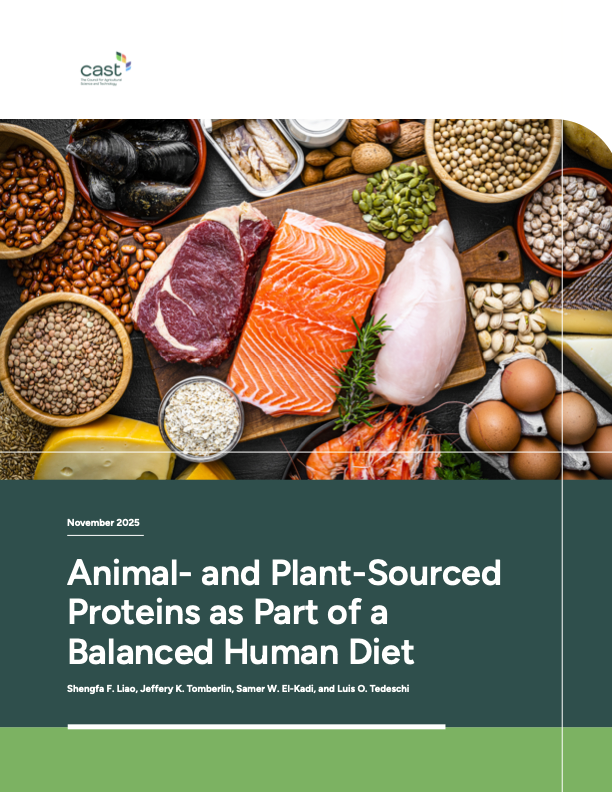
Animal and Plant Sourced Proteins as Part of a Balanced Human Diet
DOI:
https://doi.org/10.62300/1zd2tn81Keywords:
protein nutrition, amino acids, animal-sourced proteins, plant-sourced proteins, complementary proteins, dietary requirements, protein quality, global protein supply, sustainable protein sources, environmental impactAbstract
This paper examines the role of animal- and plant-sourced proteins in achieving a balanced human diet, emphasizing the importance of amino acid (AA) composition and digestibility rather than protein quantity alone. It reviews dietary requirements for essential and nonessential AAs across life stages and compares the nutritional quality of common protein sources, including cereals, legumes, nuts, seeds, meat, dairy, eggs, and emerging alternatives such as insects, algae, and cultured proteins. The discussion highlights complementary protein strategies for vegetarians and vegans, global disparities in protein supply, and future demand projections driven by population growth and evolving dietary preferences. Environmental impacts of protein production—such as nitrogen emissions, greenhouse gas contributions, and land use—are analyzed alongside sustainability considerations. The paper concludes that a balanced mix of plant and animal proteins, supported by sustainable practices and innovative sources, is essential for meeting nutritional needs while minimizing ecological footprints.
Downloads
References
2025 Dietary Guidelines Advisory Committee. 2024. Scientific Report of the 2025 Dietary Guidelines Advisory Committee: Advisory Report to the Secretary of Health and Human Services and Secretary of Agriculture. U.S. Department of Health and Human Services. https://doi.org/10.52570/DGAC2025.
Agarwal, S., McCullough, K.R., Fulgoni, V.L. 2023. “Nutritional effects of removing a serving of meat or poultry from healthy dietary patterns—a dietary modeling study.” Nutrients 15(7):1717. https://www.mdpi.com/2072-6643/15/7/1717.
Becker, E.W. 2007. “Micro-algae as a source of protein.” Biotechnology Advances 25(2):207–210, https://doi.org/10.1016/j.biotechadv.2006.11.002.
Bekhit, AE-DA, Riley, W.W., Hussain, M.A. editors. 2022. Alternative proteins: safety and food security considerations. CRC Press, Boca Raton, FL.
Bilsborough, S., Mann, N. 2006. “A review of issues of dietary protein intake in humans.” International Journal of Sport Nutrition and Exercise Metababolism 16(2):129–152, https://www.doi.org/10.1123/ijsnem.16.2.129.
Bohrer, BM. 2017. “Review: Nutrient density and nutritional value of meat products and nonmeat foods high in protein.” Trends in Food Science & Technology 65:103–112, https://www.doi.org/10.1016/j.tifs.2017.04.016.
Boyd, C.E., McNevin, A.A., Davis, R.P. 2022. “The contribution of fisheries and aquaculture to the global protein supply.” Food Security 14(3):805-827. https://doi.org/10.1007/s12571-021-01246-9.
Brestenský, M., Nitrayová, S., Patráš, P., Nitray, J. 2019. “Dietary requirements for proteins and amino acids in human nutrition.” Current Nutrition and Food Science 15(7):638-645, https://doi.org/10.2174/1573401314666180507123506.
Bryant, C.J. 2020. “Culture, meat, and cultured meat.” Journal of Animal Science 98(8), https://www.doi.org/10.1093/jas/skaa172.
Caballero, B., Allen, E., Prentice, A. (eds.). 2013. Encyclopedia of Human Nutrition. Elsevier Ltd., Oxford, UK.
Campbell, W.W., Johnson, C.A., McCabe, G.P., Carnell, N.S. 2008. “Dietary protein requirements of younger and older adults.” American Journal of Clinical Nutrition 88(5):1322–1329, https://www.doi.org/10.3945/ajcn.2008.26072.
Carpenter, S.R. 2005. “Eutrophication of aquatic ecosystems: Bistability and soil phosphorus.” Proceedings of the National Academy of Sciences 102(29):10002–10005, https://www.doi.org/10.1073/pnas.0503959102.
Choudhary, M. 1996. “Review of the use of swine manure in crop production: Effects on yield and composition and on soil and water quality.” Waste Management & Research 14(6):581–595, https://www.doi.org/10.1006/wmre.1996.0056.
Clark, C.M., Bell, M.D., Boyd, J.W., Compton, J.E., Davidson, E.A., Davis, C., Fenn, M.E., Geiser, L., Jones, L., Blett, T.F. 2017. “Nitrogen‐induced terrestrial eutrophication: Cascading effects and impacts on ecosystem services.” Ecosphere 8(7), https://www.doi.org/10.1002/ecs2.1877.
CAST (Council for Agricultural Science and Technology). 1995. “Waste Management and Utilizing in Food Production and Processing.” Task Force Report 124. Accessed August 9, 2023. CAST, Ames, IA. http://www.cast-science.org
CAST (Council for Agricultural Science and Technology). 1999. “Animal Agriculture and Global Supply.” Task Force Report 135. CAST, Ames, IA. http://www.cast-science.org
CAST (Council for Agricultural Science and Technology). 2020. “Producing food products from cultured animal tissues.” CAST, Ames, IA. http://www.cast-science.org
Chungchunlam, S.M.S., Moughan, P.J. 2024. “Comparative bioavailability of vitamins in human foods sourced from animals and plants.” Critical Reviews in Food Science and Nutrition 64(31):11590-11625. https://www.doi.org/10.1080/10408398.2023.2241541.
Cowley, F., Jennings, J., Cole, A., Beauchemin, K. 2019. “Recent advances to improve nitrogen efficiency of grain-finishing cattle in North American and Australian feedlots.” Animal Production Science 59(11), https://www.doi.org/10.1071/an19259.
Day, L. 2013. “Proteins from land plants - potential resources for human nutrition and food security.” Trends in Food Science & Technology 32(1), 25–42, https://www.doi.org/10.1016/j.tifs.2013.05.005.
Delgado, C.L. 2003. “Rising consumption of meat and milk in developing countries has created a new food revolution.” Journal of Nutrition 133(11 Suppl 2):3907s–3910s, https://www.doi.org/10.1093/jn/133.11.3907S.
DeLuca, T.H., DeLuca, D.K. 1997. “Composting for feedlot manure management and soil quality.” Journal of Production Agriculture 10(2):235-241, https://www.doi.org/10.2134/jpa1997.0235.
Dillon, J.A., Stackhouse-Lawson, K.R., Thoma, G.J., Gunter, S.A., Rotz, C.A., Kebreab, E., Riley, D.G., Tedeschi, L.O., Villalba, J., Mitloehner, F. et al. 2021. “Current state of enteric methane and the carbon footprint of beef and dairy cattle in the United States.” Animal Frontiers 11(4):57–68, https://www.doi.org/10.1093/af/vfab043.
D'Odorico, P., Carr, J.A., Laio, F., Ridolfi, L., Vandoni, S. 2014. “Feeding humanity through global food trade.” Earth's Future. 2(9):458-469, https://www.doi.org/10.1002/2014EF000250.
Faminow MD. 1998. Cattle, Deforestation and Development in the Amazon. CABI Publishing, Wallingford, UK.
FAO. 2013. “Dietary protein quality evaluation in human nutrition: Report of an FAO Expert Consultation.” Food and Agriculture Organization (FAO), The United Nations, Rome, Italy.
FAO. 2020. “The state of world fisheries and aquaculture: Sustainability in action.” Food and Agriculture Organization of the United Nations, Rome, Italy.
FAO. 2023. “Food Balances (2010–).” Food and Agriculture Organization (FAO) of the United Nations, Rome, Italy, https://www.fao.org/faostat/en/#data/FBS.
FAO/WHO/UNU. 2007. “Protein and Amino Acid Requirements in Human Nutrition: Report of a Joint FAO/WHO/UNU Expert Consultation.” WHO Technical Report Series: No. 935. WHO Press, Geneva, Switzerland. https://iris.who.int/handle/10665/43411.
Ferrari, L., Panaite, S-A., Bertazzo, A., Visioli, F. 2022. “Animal- and plant-based protein sources: a scoping review of human health outcomes and environmental impact.” Nutrients 14(23):5115. https://doi.org/10.3390/nu14235115.
Garibotto, G., Sofia, A., Saffioti, S., Bonanni, A., Mannucci, I., Verzola, D. 2010. “Amino acid and protein metabolism in the human kidney and in patients with chronic kidney disease.” Clinical Nutrition 29(4):424-433. https://www.doi.org/10.1016/j.clnu.2010.02.005.
Grigg, D. 1995. “The pattern of world protein consumption.” Geoforum 26(1):1–17, https://doi.org/10.1016/0016-7185(94)00020-8.
Henchion, M., Hayes, M., Mullen, A.M., Fenelon, M., Tiwari, B. 2017. “Future protein supply and demand: Strategies and factors influencing a sustainable equilibrium.” Foods 6(7), https://www.doi.org/10.3390/foods6070053.
Hertzler, S.R., Lieblein-Boff, J.C., Weiler, M., Allgeier, C. 2020. “Plant proteins: Assessing their nutritional quality and effects on health and physical function.” Nutrients 12(12), https://www.doi.org/10.3390/nu12123704.
Hertel, O., C. A. Skjøth, P. Løfstrøm, C. Geels, L. M. Frohn, T. Ellermann, and P. V. Madsen. 2006. "Modelling nitrogen deposition on a local scale—A review of the current state of the art." Environmental Chemistry 3, no. 5 (2006): 317–337. https://doi.org/10.1071/EN06038
Hou, Y., Wu, G. 2017. “Nutritionally nonessential amino acids: A misnomer in nutritional sciences.” Advances in Nutrition 8(1):137–139, https://www.doi.org/10.3945/an.116.012971.
Huertas, S.M., Bobadilla, P.E., Alcántara, I., Akkermans, E., van Eerdenburg, F.J.C.M. 2021. “Benefits of silvopastoral systems for keeping beef cattle.” Animals 11(4), https://www.doi.org/10.3390/ani11040992.
IOM (Institute of Medicine). 2005. Dietary reference intakes for energy, carbohydrate, fiber, fat, fatty acids, cholesterol, protein, and amino acids. The National Academies Press, Washington, DC.
IOM (Institute of Medicine). 2006. Dietary reference intakes: the essential guide to nutrient requirements. The National Academies Press, Washington, DC.
Klopfenstein, T.J., Erickson, G.E. 2002. “Effects of manipulating protein and phosphorus nutrition of feedlot cattle on nutrient management and the environment.” Journal of Animal Science 80(E-suppl_2):E106–E114, https://www.doi.org/10.2527/animalsci2002.80E-Suppl_2E106x.
Koeder, C., Perez-Cueto, F.J.A. 2022. “Vegan nutrition: A preliminary guide for health professionals.” Critical Reviews in Food Science and Nutrition 64(3):670–707, https://www.doi.org/10.1080/10408398.2022.2107997.
Leroy, F., Beal, T., Gregorini, P., McAuliffe, G.A., van Vliet, S., Hills, J. 2022. “Nutritionism in a food policy context: The case of ‘animal protein’.” Animal Production Science 62(8):712–720, https://www.doi.org/10.1071/an21237.
Li, P., He, W., Wu, G. 2021. “Composition of amino acids in foodstuffs for humans and animals.” Advances in Experimental Medicine and Biology 1332:189–210. https://doi.org/10.1007/978-3030-74180-8_11.
Lopes, C.M., Silva, A.M.M., Estrada-Bonilla, G.A., Ferraz-Almeida, R., Vieira, J.L.V., Otto, R., Vitti, G.C., Cardoso, E.J.B.N. 2021. “Improving the fertilizer value of sugarcane wastes through phosphate rock amendment and phosphate-solubilizing bacteria inoculation.” Journal of Cleaner Production 298, https://www.doi.org/10.1016/j.jclepro.2021.126821.
Madeira, M.S., Cardoso, C., Lopes. P.A., Coelho, D., Afonso, C., Bandarra, N.M, Prates, J.A.M. 2017. “Microalgae as feed ingredients for livestock production and meat quality: A review.” Livestock Science 205:111–121, https://doi.org/10.1016/j.livsci.2017.09.020.
Mariotti, G. 2019. “Dietary protein and amino acids in vegetarian diets—a review.” Nutrients 11(11), 2661. https://www.doi.org/10.3390/nu11112661.
Mattila, P., Mäkinen, S., Eurola, M., Jalava, T., Pihlava, J.M., Hellström, J., Pihlanto, A. 2018. “Nutritional value of commercial protein-rich plant products.” Plant Foods for Human Nutrition 73(2):108-115, https://www.doi.org/10.1007/s11130-018-0660-7.
Moughan, P.J. 2021. “Population protein intakes and food sustainability indices: The metrics matter.” Global Food Security 29:100548, https://doi.org/10.1016/j.gfs.2021.100548.
Moughan, P., Gilani, S., Rutherfurd, S.M., Tomé, D. 2012. “True ileal amino acid digestibility coefficients for application in the calculation of Digestible Indispensable Amino Acid Score (DIAAS) in human nutrition: Report of a Sub-Committee of the 2011 FAO Consultation on ‘Protein Quality Evaluation in Human Nutrition’ on: The assessment of amino acid digestibility in foods for humans and including a collation of published ileal amino acid digestibility data for human foods.” FAO. Rome, Italy.
Muehlhoff, E., Bennett, A., McMahon, D. 2013. “Milk and dairy products in human nutrition.” Food and Agriculture Organization (FAO) of the United Nations, Rome, Italy. https://www.fao.org/3/i3396e/i3396e.pdf.
Müller, C., and T. J. Clough. 2014. "Advances in understanding nitrogen flows and transformations: gaps and research pathways." The Journal of Agricultural Science 152, no. S1 (2014): 34–44. https://doi.org/10.1017/S0021859613000610
NASEM (National Academies of Sciences, Engineering, and Medicine). 2023. Alternative protein sources: Balancing food innovation, sustainability, nutrition, and health: Proceedings of a workshop. The National Academies Press, Washington, DC. https://doi.org/10.17226/26923.
Nishimura, Y., Højfeldt, G., Breen, L., Tetens, I., Holm, L. 2023. “Dietary protein requirements and recommendations for healthy older adults: A critical narrative review of the scientific evidence.” Nutrition Resesrch Reviews 36(1):69–85, https://www.doi.org/10.1017/s0954422421000329.
OECD. 2018 “Human Acceleration of the Nitrogen Cycle Managing Risks and Uncertainty.” Organization for Economic Co-operation and Development (OECD), Paris, France, https://www.oecd.org/environment/cc/policy-highlights-human-acceleration-of-the-nitrogen-cyclemanaging-risks-and-uncertainty.pdf
Ogilvie, A.R., McGuire, B.D., Meng, L., Shapses, S.A. 2022. « Fracture risk in vegetarians and vegans: The role of diet and metabolic factors.” Current Osteoporosis Reports 20(6):442–452, https://www.doi.org/10.1007/s11914-022-00754-7.
Park, S., Church, D.D., Schutzler, S.E., Azhar, G., Kim, I-Y., Ferrando, A.A., Wolfe, R.R. 2021. “Metabolic evaluation of the dietary guidelines’ ounce equivalents of protein food sources in young adults: A randomized controlled trial.” The Journal of Nutrition 151(5):1190–1196, https://www.doi.org/10.1093/jn/nxaa401.
Phillips, S.M., Chevalier, S., Leidy, H.J. 2016. “Protein ‘requirements’ beyond the rda: Implications for optimizing health.” Applied Physiology, Nutrition, and Metabolism 41(5):565–572, https://www.doi.org/10.1139/apnm-2015-0550.
Pinckaers, P.J.M., Hendriks, F.K., Hermans, W.J.H., Goessens, J.P.B., Senden, J.M., van Kranenburg, J.M.X., Wodzig, W.K.H.W., Snijders, T., van Loon, L.J.C. 2022. “Potato protein ingestion increases muscle protein synthesis rates at rest and during recovery from exercise in humans.” Medicine & Science in Sports& Exercise 54(9):1572–1581, https://www.doi.org/10.1249/mss.0000000000002937.
Pinckaers, P.J.M., Trommelen, J., Snijders, T., van Loon, L.J.C. 2021. “The anabolic response to plant-based protein ingestion.” Sports Medicine 51(Suppl 1),59-74, https://www.doi.org/10.1007/s40279-021-01540-8.
Raubenheimer, D., Simpson, S.J. 2019. “Protein leverage: Theoretical foundations and ten points of clarification.” Obesity 27(8):1225–1238, https://www.doi.org/10.1002/oby.22531.
Rieck-Hinz, A.M., Miller, G.A., Schafer, J.W. 1996. “Nutrient content of dairy manure from three handling systems.” Journal of Production Agriculture 9(1):82–86, https://www.doi.org/10.2134/jpa1996.0082.
Roncolini, A., Milanović, V., Aquilanti, L., Cardinali, F., Garofalo, C., Sabbatini, R., Clementi, F., Belleggia, L., Pasquini, M., Mozzon, M. et al. 2020. “Lesser mealworm (alphitobius diaperinus) powder as a novel baking ingredient for manufacturing high-protein, mineral-dense snacks.” Food Research International 131:109031, https://www.doi.org/10.1016/j.foodres.2020.109031.
Rosenfeld, R.M., Juszczak, H.M., Wong, M.A. 2023. “Scoping review of the association of plant-based diet quality with health outcomes.” Frontiers in Nutrition 10, https://www.doi.org/10.3389/fnut.2023.1211535.
Rueda, B.L., Blake, R.W., Nicholson, C.F., Fox, D.G., Tedeschi, L.O., Pell, A.N., Fernandes, E.C.M., Valentim, J.F., Carneiro, J.C. 2003. “Production and economic potentials of cattle in pasture-based systems of the western Amazon region of Brazil.” Journal of Animal Science 81(12):2923–2937, https://www.doi.org/10.2527/2003.81122923x.
Sá, A.G.A., Moreno, Y.M.F., Carciofi, B.A.M. 2020. “Plant proteins as high-quality nutritional source for human diet.” Trends in Food Science & Technology 97:170–184, https://www.doi.org/10.1016/j.tifs.2020.01.011.
Shah, N.P. (ed.) 2017. Yogurt in health and disease prevention. Academic Press, London, UK.
Strong, P.J., Self, R., Allikian, K., Szewczyk, E., Speight, R., O'Hara, I., Harrison, M.D. 2022. “Filamentous fungi for future functional food and feed.” Current Opinion in Biotechnology 76:102729, https://www.doi.org/10.1016/j.copbio.2022.102729.
Suddick, E.C., Whitney, P., Townsend, A.R., Davidson, E.A. 2013. “The role of nitrogen in climate change and the impacts of nitrogen–climate interactions in the United States: Foreword to thematic issue.” Biogeochemistry 114(1):1–10, https://www.doi.org/10.1007/s10533-012-9795-z.
Swinnen, J., McDermott, J. (eds). 2020. “COVID-19 and global food security.” International Food Policy Research Institute (IFPRI). Washington, DC: https://www.doi.org/10.2499/p15738coll2.133762.
Tedeschi, L.O., Adams, J.M., Vieira, R.A.M. 2023. “Forages and pastures symposium: Revisiting mechanisms, methods, and models for altering forage cell wall utilization for ruminants.” Journal of Animal Science 101, https://www.doi.org/10.1093/jas/skad009.
Tedeschi, L.O., Beauchemin, K.A. 2023. “Galyean Appreciation Club Review: A holistic perspective of the societal relevance of beef production and its impacts on climate change.” Journal of Animal Science 101, https://www.doi.org/10.1093/jas/skad024.
Tedeschi, L.O., Muir, J.P., Naumann, H.D, Norris, A.B, Ramírez-Restrepo, C.A., Mertens-Talcott, S.U. 2021. “Nutritional aspects of ecologically relevant phytochemicals in ruminant production.” Frontiers in Veterinary Science 8 (155):1-24. https://www.doi.org/10.3389/fvets.2021.628445.
Tomberlin, J., Huis A. 2020. “Black soldier fly from pest to ‘crown jewel’ of the insects as feed industry: An historical perspective.” Journal of Insects as Food and Feed 6:1–4, https://www.doi.org/10.3920/JIFF2020.0003.
U.S. Department of Agriculture and U.S. Department of Health and Human Services. 2020. “Dietary Guidelines for Americans, 2020–2025.” 9th Edition, DietaryGuidelines.gov.
United Nations, Department of Economic and Social Affairs, Population Division. 2022. “World Population Prospects 2022: Summary of Results.” UN DESA/POP/2022/TR/NO. 3.
Vancov, T., Schneider, R.C.S., Palmer, J., McIntosh, S., Stuetz, R. 2015. “Potential use of feedlot cattle manure for bioethanol production.” Bioresource Technology 183:120–128, https://www.doi.org/10.1016/j.biortech.2015.02.027.
Vasconcelos, J.T., Greene, L.W., Cole, N.A., Brown, M.S., McCollum, F.T., Tedeschi, L.O. 2006. “Effects of phase feeding of protein on performance, blood urea nitrogen concentration, manure nitrogen: phosphorus ratio, and carcass characteristics of feedlot cattle.” Journal of Animal Science 84(11):3032–3038, https://www.doi.org/10.2527/jas.2005-711.
Vasconcelos, J.T., Tedeschi, L.O., Fox, D.G., Galyean, M.L., Greene, L.W. 2007. “Review: Feeding nitrogen and phosphorus in beef cattle feedlot production to mitigate environmental impacts.” The Professional Animal Scientist 23(1):8–17, https://www.doi.org/10.1532/s1080-7446(15)309426.
Vieux, F., Rémond, D., Peyraud, J-L., Darmon, N. 2022. “Approximately half of total protein intake by adults must be animal-based to meet nonprotein, nutrient-based recommendations, with variations due to age and sex.” The Journal of Nutrition 152(11):2514–2525, https://www.doi.org/10.1093/jn/nxac150.
Vogel, G. 2010. “For more protein, filet of cricket.” Science 327(5967):811, https://www.doi.org/10.1126/science.327.5967.811.
Wang, Y., Zhou, J.,Wang, G., Cai, S., Zeng, X., Qiao, S. . 2018. “Advances in low-protein diets for swine. ” Journal of Animal Science and Biotechnology 9(1):60, https://doi.org/10.1186/s40104-018-0276-7.
Weiler, M., Hertzler, S.R., Dvoretskiy, S. 2023. “Is it time to reconsider the U.S. recommendations for dietary protein and amino acid intake?” Nutrients 15(4):838, https://www.doi.org/10.3390/nu15040838.
West, S., Monteyne, A.J., van der Heijden, I., Stephens, F.B., Wall, B.T. 2023. “Nutritional considerations for the vegan athlete.” Advances in Nutrition 14(4):774–795, https://www.doi.org/10.1016/j.advnut.2023.04.012.
Williams, P. 2007. “Nutritional composition of red meat.” Nutrition & Dietetics 64(s4):S113–S119, https://doi.org/10.1111/j.1747-0080.2007.00197.x.
Wu, G. 2016. “Dietary protein intake and human health.” Food & Function 7(3):
Published
Issue
Section
License
Copyright (c) 2025 Council for Agricultural Science and Technology (CAST)

This work is licensed under a Creative Commons Attribution-NonCommercial 4.0 International License.
License Terms for CC Attribution-NonCommercial 4.0:
License URL: https://creativecommons.org/licenses/by-nc/4.0/
License Terms Statement:
You are free to:
- Share — copy and redistribute the material in any medium or format
- Adapt — remix, transform, and build upon the material
Under the following conditions:
- Attribution — you must give appropriate credit, provide a link to the license, and indicate if changes were made
- NonCommercial — you may not use the material for commercial purposes
No additional restrictions — you may not apply legal terms or technological measures that legally restrict others from doing anything the license permits.