
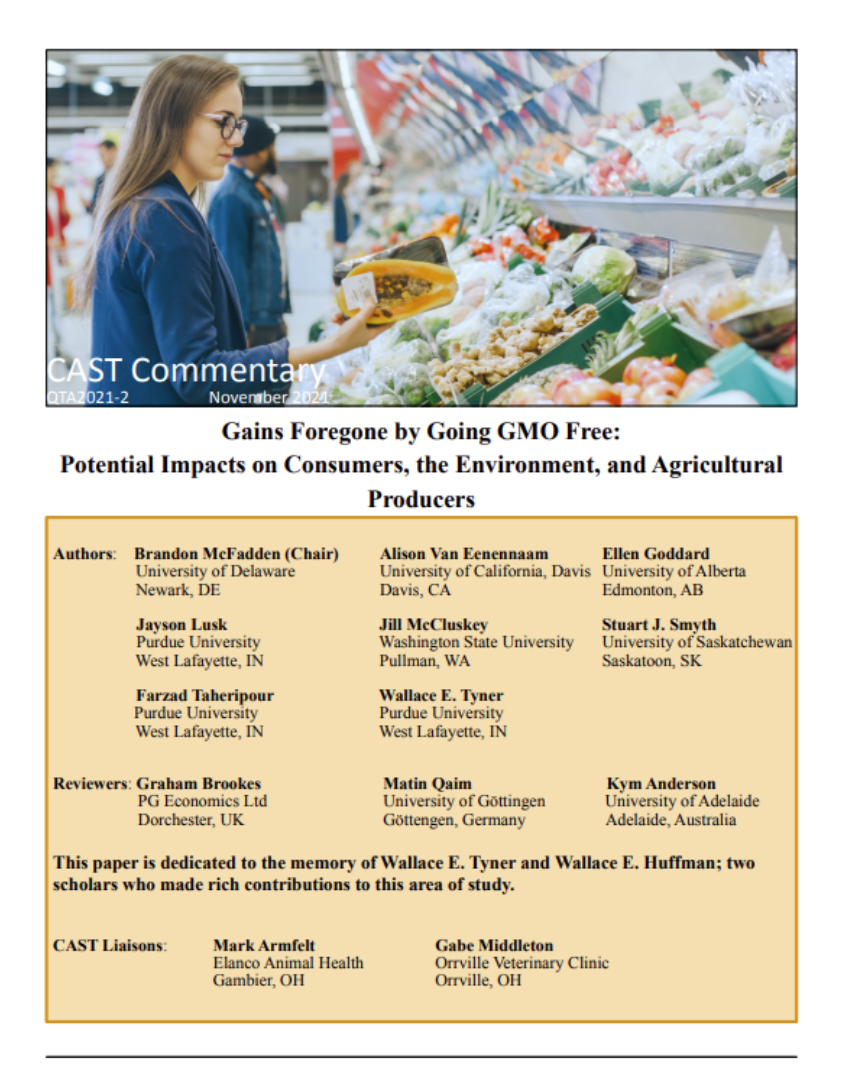
Gains Foregone by Going GMO Free: Potential Impacts on Consumers, the Environment, and Agricultural Producers
DOI:
https://doi.org/10.62300/axx6b241Palabras clave:
Genetically Modified Organisms (GMOs), Agricultural Productivity, Environmental Sustainability, Food Security, Economic ImpactsResumen
This paper examines the societal, environmental, and economic implications of eliminating genetically modified organisms (GMOs) from agricultural production systems. GMOs have enabled significant advancements in food security, yield stability, pest and disease management, and environmental sustainability over the past three decades. The authors synthesize evidence demonstrating that GMO crops reduce pesticide use, lower toxicity exposure, conserve land through higher yields, and support conservation tillage practices that enhance soil health and reduce greenhouse gas emissions. Conversely, removing GMO traits would increase global land‑use pressure, raise pesticide applications, elevate food prices, and reduce farmer income—effects that would be particularly harmful for low‑income consumers and developing regions. The analysis highlights how GMOs contribute to human health through reduced mycotoxin levels and emerging biofortified crops, such as Golden Rice, which address micronutrient deficiencies. Additionally, the paper identifies how regulatory delays and trade barriers restrict innovation and contribute to global welfare losses. Overall, the findings indicate that foregoing GMO technology would impose substantial economic, environmental, and public‑health costs, underscoring the importance of science‑based policy frameworks that enable continued innovation and adoption of genetically engineered and gene‑edited crops. [QTA2021-2-GMO-Free-1 | PDF]Descargas
Referencias
Abbas, K.H., Robert, M., Zablotowicz, M.A., Weaver, W., Shier, H.T., Bruns, A., Bellaloui, N., Accinelli, C., & Abel, C.A. (2013). Implications of Bt traits on mycotoxin contamination in maize: Overview and recent experimental results in the Southern United States. Journal of Agricultural and Food Chemistry, 61(48), 11759–11770.
Ahmed, A.U., Hoddinott, J., Abedin, N., & Hossain, N. (2021). The impacts of GM foods: Results from a randomized controlled trial of Bt eggplant in Bangladesh. American Journal of Agricultural Economics, 103(4), 1186–1206.
Alexandratos, N., & Bruinsma, J. (2012). World agriculture towards 2030/2050: The 2012 revision. FAO.
Alshannaq, A., & Yu, J.H. (2017). Occurrence, toxicity, and analysis of major mycotoxins in food. International Journal of Environmental Research and Public Health, 14(6), 632.
Alston, J.M., & Sumner, D.A. (2012). Proposition 37—California food labeling initiative: Economic implications for farmers and the food industry.
Alston, J.M., Beddow, J.M., & Pardey, P.G. (2009). Agricultural research, productivity, and food prices in the long run. Science, 325(5945), 1209–1210.
American Association for the Advancement of Science (AAAS). (2012). Statement on labeling of genetically modified foods.
American Medical Association (AMA). (2012). Reports of the Council on Science and Public Health A‑12, 25–27.
Anderson, K. (2010). Economic impacts of policies affecting biotechnology and trade. New Biotechnology, 27(5), 558–564.
Areal, F.J., Riesgo, L., & Rodríguez‑Cerezo, E. (2011). Attitudes of European farmers towards GM crop adoption. Plant Biotechnology Journal, 9(9), 945–957.
Asanuma, N., & Ozaki, T. (2020). Japan approves gene‑edited ‘super tomato.’ Nikkei Asia.
Awada, L., & Smyth, S.J. (2018). Assessment of Saskatchewan agricultural greenhouse gas emissions.
Bánáti, H., Darvas, B., Fehér‑Tóth, S., Czéh, Á., & Székács, A. (2017). Determination of mycotoxin production of Fusarium species in genetically modified maize. Toxins, 9(2), 70.
Bailey, G. (2021). Sierra Club inches toward accepting genetically modified chestnut trees.
Bar‑Gill, O., Schkade, D., & Sunstein, C.R. (2019). Drawing false inferences from mandated disclosures. Behavioural Public Policy, 3(2), 209–227.
Barrows, G., Sexton, S., & Zilberman, D. (2014). The impact of agricultural biotechnology on supply and land use. Environment and Development Economics, 19(6), 676–703.
Battilani, P., Toscano, P., Van der Fels-Klerx, H.J., et al. (2016). Aflatoxin B1 contamination in maize in Europe increases due to climate change. Scientific Reports, 6, 1–7.
Biden, S., Smyth, S.J., & Hudson, D. (2018). The economic and environmental cost of delayed GM crop adoption: The case of Australia’s GM canola moratorium. GM Crops and Food, 9(1), 13–20.
Blomme, G., Jacobsen, K., Ocimati, W., et al. (2014). Fine‑tuning banana Xanthomonas wilt control options in East and Central Africa. European Journal of Plant Pathology, 139(2), 271–287.
Bowers, E., Hellmich, R., & Munkvold, G. (2014). Comparison of fumonisin contamination using HPLC and ELISA in Bt and non‑Bt maize. Journal of Agricultural and Food Chemistry, 62(27), 6463–6472.
Brookes, G., & Barfoot, P. (2020a). Environmental impacts of genetically modified crop use 1996–2018. GM Crops and Food, 11(4), 215–241.
Brookes, G., & Barfoot, P. (2020b). GM crop technology use 1996–2018: Farm income and production impacts. GM Crops and Food, 11(4), 242–261.
Brookes, G., Taheripour, F., & Tyner, W.E. (2017). The contribution of glyphosate to agriculture. GM Crops and Food, 8(4), 216–228.
Bugbee, M., & Loureiro, M.L. (2003). A risk‑perception analysis of genetically modified foods based on stated preferences. American Agricultural Economics Association (now AAEA).
Hayes, C., Christensen, S.A., Dampanaboina, L., Chen, J., Burke, J., Ware, D., & Xin, Z. (2019). Fertility of pedicellate spikelets in sorghum is controlled by a jasmonic acid regulatory module. International Journal of Molecular Sciences, 20(19), 4951.
Chavas, J‑P., Shi, G., & Lauer, J. (2014). The effects of GM technology on maize yield. Crop Science, 54(4), 1331–1335.
Chen, J‑H., Chen, S‑T., He, N‑Y., Wang, Q‑L., Zhao, Y., Gao, W., & Guo, F‑Q. (2020). Nuclear‑encoded synthesis of the D1 subunit of photosystem II increases photosynthetic efficiency and crop yield. Nature Plants, 6, 570–580.
CAST. (2020a). Economic Impacts of COVID‑19 on Food and Agricultural Markets. Council for Agricultural Science and Technology.
CAST. (2020b). Food Biofortification—Reaping the Benefits of Science to Overcome Hidden Hunger. Issue Paper 69.
De Moura, F.F., Moursi, M., Donahue Angel, M., Angeles‑Agdeppa, I., Atmarita, Gironella, G.M., Muslimatun, S., & Carriquiry, A. (2016). Biofortified β‑carotene rice improves vitamin A intake and reduces inadequacy in women and children. American Journal of Clinical Nutrition, 104(3), 769–775.
Dubock, A. (2019). Golden Rice: To combat vitamin A deficiency for public health. In Vitamin A (pp. 1–21).
Edgerton, M.D. (2009). Increasing crop productivity to meet global needs for feed, food, and fuel. Plant Physiology, 149(1), 7–13.
EASAC (European Academies Science Advisory Council). (2013). Planting the Future: Opportunities and Challenges for Using Crop Genetic Improvement Technologies.
European Commission (EC). (2019). Scientific perspective on the regulatory status of gene editing and implications for the GMO Directive.
Falck‑Zepeda, J.B., Traxler, G., & Nelson, R.G. (1999). Rent creation and distribution from the first three years of planting Bt cotton. ISAAA Brief No. 14.
Falck‑Zepeda, J.B., Traxler, G., & Nelson, R.G. (2000a). Rent creation and distribution from biotechnology innovations: Bt cotton & HT soybeans in 1997. Agribusiness, 16, 21–32.
Falck‑Zepeda, J.B., Traxler, G., & Nelson, R.G. (2000b). Surplus distribution from biotechnological innovation. American Journal of Agricultural Economics, 82, 360–369.
Farmer Scientist Network (FSN). (2012). EU GMO Policies, Sustainable Farming and Public Research.
Fedoroff, N.V., Battisti, D.S., Beachy, R.N., Cooper, P.J., Fischhoff, D.A., et al. (2010). Radically rethinking agriculture for the 21st century. Science, 327, 833–834.
Fernandez‑Cornejo, J., & McBride, W.D. (2002). Adoption of Bioengineered Crops. USDA AER No. 810.
Fernandez‑Cornejo, J., Hallahan, C., Nehring, R., Wechsler, S., & Grube, A. (2012). Conservation tillage, herbicides, and genetically engineered crops in the U.S.: Soybean case. AgBioForum, 15(3), 231–241.
Fernandez‑Cornejo, J., Hendricks, C., & Mishra, A. (2005). Technology adoption and off‑farm income: The case of HT soybeans. Journal of Agricultural and Applied Economics, 37(3), 549–563.
Fernandez‑Cornejo, J., Wechsler, S., Livingston, M., & Mitchell, L. (2014). Genetically Engineered Crops in the United States. USDA‑ERS Report No. 162.
Fernbach, P.M., Light, N., Scott, S.E., Inbar, Y., & Rozin, P. (2019). Extreme opponents of GM foods know the least but think they know the most. Nature Human Behaviour, 3(3), 251–256.
FAO. (2004). Worldwide regulations for mycotoxins in foods and feeds, 2003.
FAO. (2020). The State of Food and Agriculture 2020.
Gardner, J.G., Nehring, R.F., & Nelson, C.H. (2009). GM crops and household labor savings in U.S. production. AgBioForum, 12(3–4), 303–312.
Garg, M., Sharma, N., Sharma, S., Kapoor, P., Kumar, A., Chunduri, V., & Arora, P. (2018). Biofortified crops... improving lives worldwide. Frontiers in Nutrition, 5, 12.
Gladman, N., Jiao, Y., Lee, Y.K., Zhang, L., Chopra, R., Regulski, M., & Burow, G. (2019). Fertility of pedicellate spikelets in sorghum... jasmonic acid regulation. International Journal of Molecular Sciences, 20(19), 4951.
Gleim, S., Lubieniechi, S., & Smyth, S.J. (2020). CRISPR‑Cas9 applications in Canadian plant breeding. The CRISPR Journal, 3(1), 44–51.
Gonsalves, C.V., & Gonsalves, D. (2014). The Hawaii papaya story. In Handbook on Agriculture, Biotechnology and Development. Edward Elgar.
Grant, J. (2020). Restoring the American chestnut with genetic engineering.
Hakim, D. (2016). Doubts about the promised bounty of GM crops. New York Times.
Hefferon, K.L. (2015). Nutritionally enhanced food crops: Progress and perspectives. International Journal of Molecular Sciences, 16(2), 3895–3914.
Hertel, T.W., Baldos, U.L.C., & Fuglie, K.O. (2020). Trade in technology: A potential solution to food security challenges of the 21st century. NBER Working Paper No. 27148.
Hodges, A.W., Rahmani, M., Stevens, T.J., & Spreen, T.H. (2014). Economic impacts of the Florida citrus industry in 2012–13. University of Florida IFAS.
House of Commons (HOC). (2015). Advanced Genetic Techniques for Crop Improvement: Regulation, Risk and Precaution. UK Parliament Science & Technology Committee.
Huffman, W.E., & McCluskey, J.J. (2014). The economics of labeling GM foods. AgBioForum, 17(2–3), 156–160.
Huffman, W.E., Rousu, M., Shogren, J.F., & Tegene, A. (2007). The effects of prior beliefs and learning on consumers’ acceptance of GM foods. Journal of Economic Behavior & Organization, 63(1), 193–206.
Hussein, H.S., & Brasel, J.M. (2001). Toxicity, metabolism, and impact of mycotoxins on humans and animals. Toxicology, 167(2), 101–134.
Hutchison, W.D., Burkness, E.C., Mitchell, P.D., et al. (2010). Area‑wide suppression of European corn borer with Bt maize provides savings to non‑Bt growers. Science, 330(6001), 222–225.
IRRI (International Rice Research Institute). (2021). Philippines approves nutrient‑enriched Golden Rice for planting.
**ISAAA. (2019). ISAAA Brief 55: Biotech Crops Drive Socio‑Economic Development and Sustainable Environment. **
Kalaitzandonakes, N., Lusk, J., & Magnier, A. (2018). The price of non‑genetically modified food. Food Policy, 78, 38–50.
Klümper, W., & Qaim, M. (2014). A meta‑analysis of the impacts of genetically modified crops. PLOS ONE, 9(11), e111629.
Kleter, G.A., Bhula, R., Bodnaruk, K., et al. (2007). Altered pesticide use on transgenic crops and associated environmental impacts. Pest Management Science, 63(11), 1107–1115.
Kniss, A.R. (2018). Genetically engineered herbicide‑resistant crops and weed evolution in the United States. Weed Science, 66(2), 260–273.
Kolodinsky, J., & Lusk, J.L. (2018). Mandatory GMO labels can improve attitudes toward genetically engineered foods. Science Advances, 4(6), eaaq1413.
Kouser, S., & Qaim, M. (2011). Impact of Bt cotton on pesticide poisoning in smallholder agriculture. Ecological Economics, 70(11), 2105–2113.
Kouser, S., & Qaim, M. (2013). Valuing financial, health, and environmental benefits of Bt cotton in Pakistan. Agricultural Economics, 44(3), 323–335.
Kovach, J., Petzoldt, C., Degni, J., & Tette, J. (1992). A method to measure the environmental impact of pesticides. Cornell University.
Kromdijk, J., Glowacka, K., Leonelli, L., et al. (2016). Improving photosynthesis by accelerating recovery from photoprotection. Science, 354(6314), 857–861.
Kuhlman, E.G. (1978). The devastation of American chestnut by blight. In Proceedings of the American Chestnut Symposium.
Lassoued, R., Macall, M.M., Hesseln, H., Phillips, P.W.B., & Smyth, S.J. (2019). Benefits of genome‑edited crops: Expert opinion. Transgenic Research, 28(2), 247–256.
Lawrence, J.D., Mintert, J.R., Anderson, J.D., & Anderson, D.P. (2008). Feed grains and livestock: Impacts on meat supplies and prices. Choices, 23, 11–15.
Lesser, W., & Lynch, S. (2014). Costs of labeling genetically modified food products in New York State. Cornell University.
Lusk, J.L. (2003). Effects of cheap talk on WTP for Golden Rice. American Journal of Agricultural Economics, 85(4), 840–856.
Lusk, J.L., McFadden, B.R., & Rickard, B.J. (2015). Which biotech foods are most acceptable to the public? Biotechnology Journal, 10(1), 13–16.
Lusk, J.L., Tack, J., & Hendricks, N.P. (2019). Heterogeneous yield impacts from GE corn and importance of weather controls. In Agricultural Productivity and Producer Behavior. University of Chicago Press.
Lusk, J.L., House, L.O., Valli, C., et al. (2004). Effect of biotechnology information on acceptance of GM food: Auctions in US, England, and France. European Review of Agricultural Economics, 31(2), 179–204.
Lusk, J.L., Traill, W.B., House, L.O., et al. (2006). Comparative advantage in demand for GM food in US and EU. Journal of Agricultural Economics, 57(1), 1–21.
Lynas, M. (2018). Seeds of Science: Why We Got It So Wrong on GMOs. Bloomsbury Publishing.
Mahaffey, H., Taheripour, F., & Tyner, W.E. (2016). Evaluating the economic and environmental impacts of a global GMO ban. Journal of Environmental Protection, 7(11), 1522–1546.
Marasas, W.F.O., Riley, R.T., Hendricks, K.A., Stevens, V.L., Sadler, T.W., et al. (2004). Fumonisins disrupt sphingolipid metabolism... a potential risk factor for neural tube defects. The Journal of Nutrition, 134(4), 711–716.
Marin, S., Ramos, A.J., Cano‑Sancho, G., & Sanchis, V. (2013). Mycotoxins: Occurrence, toxicology, and exposure assessment. Food and Chemical Toxicology, 60, 218–237.
Marra, M.C., & Piggott, N.E. (2006). The value of non‑pecuniary traits of crop biotechnologies. In Regulating Agricultural Biotechnology: Economics and Policy (pp. 145–177). Springer.
Masip, G., Sabalza, M., Pérez‑Massot, E., Banakar, R., Cebrian, D., et al. (2013). Paradoxical EU agricultural policies on genetically engineered crops. Trends in Plant Science, 18(6), 312–324.
Mbuya, N.V., Demombynes, G., Piza, S.F.A., & Adona, A.J.V. (2021). Undernutrition in the Philippines: Scale, Scope, and Opportunities for Nutrition Policy. World Bank Group.
McComas, K.A., Besley, J.C., & Steinhardt, J. (2014). Factors influencing U.S. consumer support for GM disease‑resistant crops. Appetite, 78, 8–14.
McFadden, B.R., & Malone, T. (2018). How mandatory labeling of GM food nudges consumer decision‑making. Journal of Behavioral and Experimental Economics, 77, 186–194.
McFadden, B.R., & Lusk, J.L. (2015). Cognitive biases in assimilation of scientific info on GM foods and climate. Food Policy, 54, 35–43.
McFadden, B.R., & Lusk, J.L. (2016). What consumers don’t know about GM food and how it affects beliefs. FASEB Journal, 30(9), 3091–3096.
McFadden, B.R., Anderton, B.N., Davidson, K.A., & Bernard, J.C. (2021). Effect of scientific info on preferences for gene‑edited citrus greening solutions. Applied Economic Perspectives and Policy.
McFadden, B.R. (2017). The unknowns and implications of mandatory GMO labeling. Trends in Biotechnology, 35(1), 1–3.
Miller, D., & Marasas, W. (2002). Ecology of mycotoxins in maize and groundnuts. LEISA, 17, 23–24.
Miranowski, J.A., & Lacy, K.M. (2016). When do resistance‑management practices pay? Western corn rootworm case. AgBioForum, 19(2), 173–183.
Moore, O., & Applegate, Z. (2020). GM crops: The Greenpeace activists who risked jail to destroy a maize field. BBC News.
Moschini, G., Lapan, H., & Sobolevsky, A. (2000). Roundup Ready soybeans and welfare effects in the soybean complex. Agribusiness, 16(1), 33–55.
Muringai, V., Fan, X., & Goddard, E. (2020). Canadian consumer acceptance of gene‑edited vs. GM potatoes: A choice experiment. Canadian Journal of Agricultural Economics, 68(1), 47–63.
NASEM (National Academies of Sciences, Engineering and Medicine). (2016). Genetically Engineered Crops: Experiences and Prospects. National Academies Press.
NRC (National Research Council). (2010). The Impact of Genetically Engineered Crops on Farm Sustainability in the U.S. National Academies Press.
Nes, K., Schaefer, K.A., & Scheitrum, D.P. (2021). Global food trade and costs of non‑adoption of genetic engineering. American Journal of Agricultural Economics.
Njuki, E.A. (2020). A Look at Agricultural Productivity Growth in the United States, 1948–2017. USDA Blog.
Nobel Laureates. (2016). Nobel Laureate Letter Supporting Precision Agriculture (GMOs).
OSTP (Office of Science and Technology Policy). (1986). Coordinated framework for regulation of biotechnology. Federal Register, 51(123), 23350.
Ortiz‑Bobea, A., Ault, T.R., Carrillo, C.M., Chambers, R.G., & Lobell, D.B. (2021). Anthropogenic climate change has slowed global agricultural productivity growth. Nature Climate Change, 11(4), 306–312.
Ostrý, V., Malíř, F., & Pfohl‑Leszkowicz, A. (2015). Comparative aflatoxin data for Bt vs. non‑Bt maize. Acta Veterinaria Brno, 84(1), 47–53.
Oswald, I.P., & Coméra, C. (1998). Immunotoxicity of mycotoxins. Revue de Médecine Vétérinaire, 149(6), 585–590.
Paarlberg, R. (2014). A dubious success: The NGO campaign against GMOs. GM Crops & Food, 5(3), 223–228.
Paarlberg, R. (2020). Resetting the Table: Straight Talk About the Food We Grow and Eat. Knopf.
Pellegrino, E., Bedini, S., Nuti, M., & Ercoli, L. (2018). Impact of genetically engineered maize on agronomic, environmental, and toxicological traits: A meta‑analysis of 21 years of field data. Scientific Reports, 8(1), 1–12.
Perry, E.D., Ciliberto, F., Hennessy, D.A., & Moschini, G.C. (2018). GE crops and pesticide use in U.S. maize and soybeans. Science Advances, 2(8), e1600850.
Perry, E.D., Moschini, G.C., & Hennessy, D.A. (2016). Testing for complementarity: Glyphosate‑tolerant soybeans and conservation tillage. American Journal of Agricultural Economics, 98(3), 765–784.
Phillips McDougall. (2011). The cost and time involved in the discovery, development, and authorization of a new biotech trait. CropLife International.
Phillips McDougall. (2013). R&D trends for chemical crop protection and the European market.
Qaim, M., & Traxler, G. (2005). Roundup Ready soybeans in Argentina: Farm‑level and aggregate welfare effects. Agricultural Economics, 32(1), 73–86.
Ray, D.K., Ramankutty, N., Mueller, N.D., West, P.C., & Foley, J.A. (2012). Recent patterns of crop yield growth and stagnation. Nature Communications, 3(1), 1–7.
Rousu, M., Huffman, W.E., Shogren, J.F., & Tegene, A. (2007). Value of verifiable information in controversial markets: GMO evidence from lab auctions. Economic Inquiry, 45(3), 409–432.
Schaub, P., Al‑Babili, S., Drake, R., & Beyer, P. (2005). Why is Golden Rice golden instead of red? Plant Physiology, 138(1), 441–450.
Scheitrum, D., Schaefer, K.A., & Nes, K. (2020). Realized and potential global production effects from genetic engineering. Food Policy, 93, 101882.
Siegrist, M., Connor, M., & Keller, C. (2012). Trust, confidence, fairness, and moral conviction in acceptance of GM field experiments. Risk Analysis, 32(8), 1394–1403.
Smith, J.E., & Henderson, R. (1991). Mycotoxins and Animal Foods. CRC Press.
Smyth, S.J. (2017). GM crops, regulatory delays, and international trade. Food and Energy Security, 6(2), 78–86.
Smyth, S.J. (2019). Global status of regulation of genome editing technologies. CAB Reviews, 14(21), 1–6.
Smyth, S.J., Gusta, M., Belcher, K., Phillips, P.W.B., & Castle, D. (2011a). Environmental impacts from herbicide‑tolerant canola production in Western Canada. Agricultural Systems, 104(5), 403–410.
Smyth, S.J., Gusta, M., Belcher, K., Phillips, P.W.B., & Castle, D. (2011b). Changes in herbicide use after adoption of HR canola in Western Canada. Weed Technology, 25(3), 492–500.
Sobolevsky, A., Moschini, G., & Lapan, H. (2005). GM crops and product differentiation: Trade and welfare effects. American Journal of Agricultural Economics, 87(3), 621–644.
Stebbins, M. (2016). 3 ways GMOs keep food costs down. Forbes.
Steinwand, M.A., & Ronald, P.C. (2020). Crop biotechnology and the future of food. Nature Food, 1(5), 273–283.
Subramanian, A., & Qaim, M. (2010). The impact of Bt cotton on poor households in rural India. Journal of Development Studies, 46(2), 295–311.
Sutherland, C. (2021). Examining herbicide‑tolerant canola’s contribution to carbon sequestration in Saskatchewan soils. M.Sc. Thesis, University of Saskatchewan.
Sydenham, E.W., Shephard, G.S., Thiel, P.G., Marasas, W.F.O., & Stockenstrom, S. (1991). Fumonisin contamination of corn‑based foods. Journal of Agricultural and Food Chemistry, 39(11), 2014–2018.
Tagliabue, G. (2016). European incoherence on GMO cultivation vs. importation. Nature Biotechnology, 34(7), 694–695.
Taheripour, F., & Tyner, W.E. (2017). What would happen if we don’t have GMO traits? In World Agricultural Resources and Food Security. Emerald Publishing.
Taheripour, F., Mahaffey, H., & Tyner, W.E. (2016). Evaluation of economic, land‑use, and emissions impacts of substituting non‑GMO crops in the U.S. AgBioForum, 19(2), 156–172.
Tilman, D., Cassman, K.G., Matson, P.A., Naylor, R., & Polasky, S. (2002). Agricultural sustainability and intensive production practices. Nature, 418(6898), 671–677.
Tola, M., & Kebede, B. (2016). Occurrence, importance, and control of mycotoxins: A review. Cogent Food & Agriculture, 2(1), 1191103.
Tripathi, L., Tripathi, J.N., Kiggundu, A., Korie, S., Shotkoski, F., & Tushemereirwe, W.K. (2014). Field trial of Xanthomonas wilt disease‑resistant bananas in East Africa. Nature Biotechnology, 32(9), 868–870.
USDA‑AMS (United States Agricultural Marketing Service). (2018). National Bioengineered Food Disclosure Standard.
USDA‑ERS (United States Department of Agriculture, Economic Research Service). (2020a). Agricultural Trade Statistics.
USDA‑ERS. (2020b). Recent Trends in GE Adoption.
USDA‑ERS. (2020c). The Role of Productivity Growth in U.S. Agriculture.
USDA Agricultural Marketing Service. (2018). National Bioengineered Food Disclosure Standard (NBFDS).
USEPA (United States Environmental Protection Agency). (2020a). Global Greenhouse Gas Emissions Data.
USEPA. (2020b). Inventory of U.S. Greenhouse Gas Emissions and Sinks.
FDA (United States Food and Drug Administration). (2020). Understanding New Plant Varieties.
Van Esse, H.P., Reuber, T.L., & van der Does, D. (2020). Genetic modification to improve disease resistance in crops. New Phytologist, 225(1), 70–86.
Vitale, J., Vognan, G., & Ouattarra, M. (2014). GM cotton. In Handbook on Agriculture, Biotechnology and Development (pp. 604–620). Edward Elgar Publishing.
Weir, M.J. (2019). Health Information Campaigns and GM Food Labels in the Seafood Market. PhD Dissertation, University of Rhode Island.
Wesseler, J., Smart, R.D., Thomson, J., & Zilberman, D. (2017). Foregone benefits of food crop improvements in Sub‑Saharan Africa. PLOS ONE, 12(7), e0181353.
Wilson, L., & Lusk, J.L. (2020). Consumer willingness to pay for redundant food labels. Food Policy, 97, 101938.
WHO (World Health Organization). (2014). Food, genetically modified.
WHO. (2018). State of Food Security and Nutrition in the World 2018.
Wu, F. (2006). Mycotoxin reduction in Bt corn: Economic, health, and regulatory impacts. Transgenic Research, 15(3), 277–289.
Wu, F. (2007). Bt corn and impact on mycotoxins. CAB Reviews: Perspectives in Agriculture, Veterinary Science, Nutrition and Natural Resources, 2(60).
Zilberman, D., Wesseler, J.H.H., Schmitz, A., & Gordon, B. (2018). Economics of agricultural biotechnology. In The Routledge Handbook of Agricultural Economics (pp. 670–686).
Zimmermann, R., & Qaim, M. (2004). Potential health benefits of Golden Rice: A Philippine case study. Food Policy, 29(2), 147–168.
Descargas
Publicado
Número
Sección
Licencia
Derechos de autor 2021 Council for Agricultural Science and Technology (CAST)

Esta obra está bajo una licencia internacional Creative Commons Atribución-NoComercial 4.0.
License Terms for CC Attribution-NonCommercial 4.0:
License URL: https://creativecommons.org/licenses/by-nc/4.0/
License Terms Statement:
You are free to:
- Share — copy and redistribute the material in any medium or format
- Adapt — remix, transform, and build upon the material
Under the following conditions:
- Attribution — you must give appropriate credit, provide a link to the license, and indicate if changes were made
- NonCommercial — you may not use the material for commercial purposes
No additional restrictions — you may not apply legal terms or technological measures that legally restrict others from doing anything the license permits.